Moholy-Nagy’s Dynamik der Gross-Stadt (1920-1921): An Illustration of the Limits of Reproducibility of the Historical Avant-Garde and the Epistemological Value of Experimentation
Kelly Daniela Norris / University of Texas at Austin

In 1921-1922, the Hungarian avant-garde artist, photographer, filmmaker, and constructivist, László Moholy-Nagy, wrote blueprints for a film he envisioned, titled, Dynamik der gross-stradt (Dynamic of the Metropolis). The script — a labyrinthine template of bold lines, images, graphics and commands, and a riddle in and of itself — not only showcases his concept of typophoto (the merging of photography and typography) to capture the perceptual and kinetic chaos of urban modern life, but manages to emblematize the unfulfilled promise that is the historical avant-garde. That is, each early 20th century avant-garde movement and, synecdochically, its individual art pieces, set out to incite a “new vision” – one that demands the future in the present tense. This ideation of the “new” and the “future” typically manifests in new perspectives, new art techniques, and new methods for shocking the individual, collective, and/or sociopolitical system(s) as a catalyst for disrupting and changing the status quo.
However, couched beneath the objective of newness in the avant-garde is the nagging question of temporality. Can the newness inscribed in the techniques and methods of the historical avant-garde and its intended impact to radically combat complacency exist outside of its own historical moment? Or, simply put: at what point is a shock no longer shocking and its promise of the “new” foreclosed? This question calls forth debates around reproducibility, originality, and legacy. Moholy-Nagy contemplated this very crisis of temporality in his seminal 1922 essay, “Produktion-Reproduktion,” for De Stijl, where he maintains that there is a “permanent necessity for new experiments.” He states:
From this perspective, creative activities are useful only if they produce new, so far unknown relations. In other words, in specific regard to creation, reproduction (reiteration of already existing relations) can be regarded for the most part as mere virtuosity.
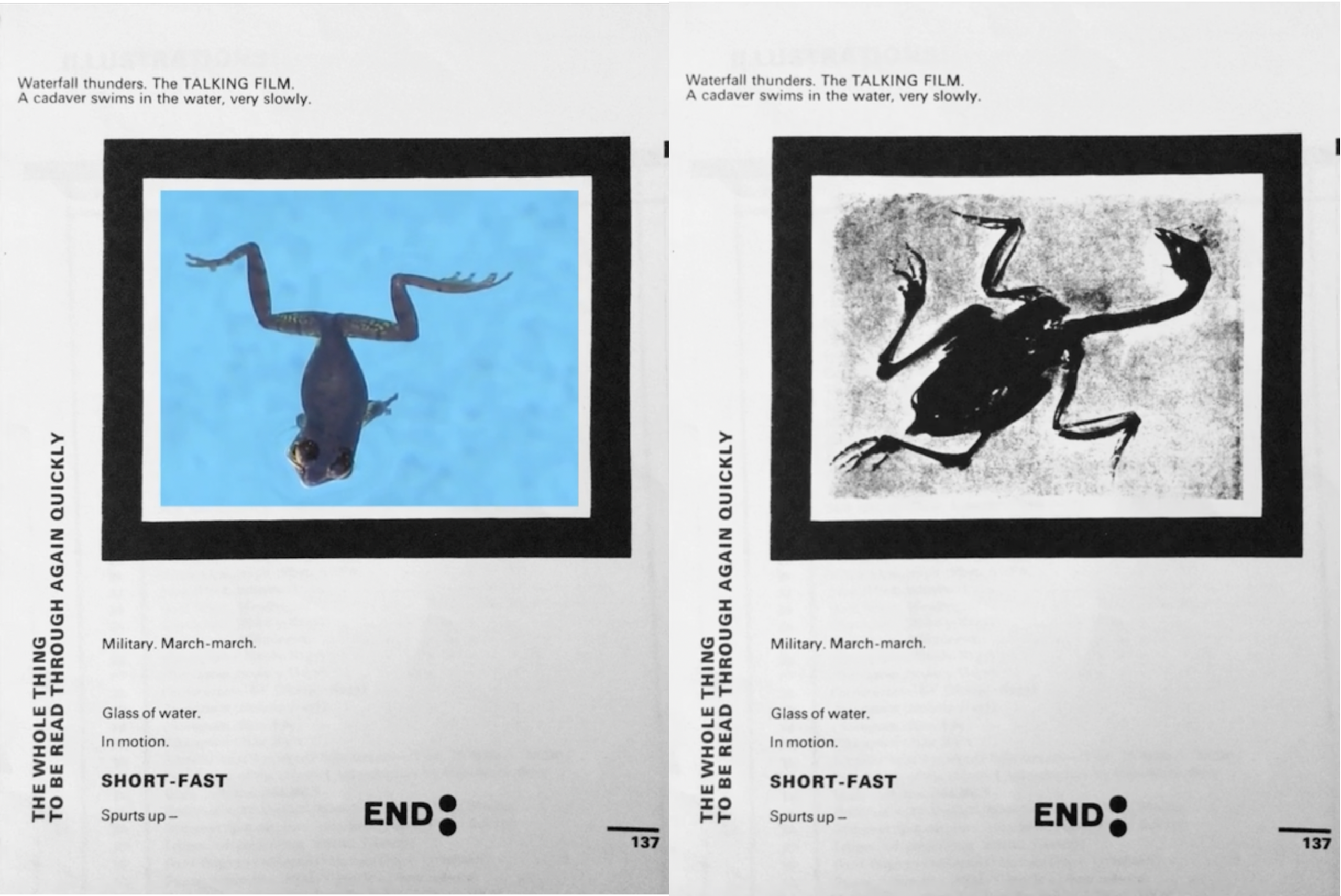
Yet, herein lies the tension between production and reproduction: housed within its manifestos and political impulses, the avant-garde demands threads of consistency in order for the meanings of its “new, so far unknown relations” to emerge coherently, thus constituting itself as a movement. Moreover, these threads — arguably produced via the reproduction of shocks — are intended to redirect course from the Bourgeois-inflicted woes and calamities of the now and, through its newness, burst forth a radical future.
Thus, it is my contention that despite each movement’s efforts to produce a template to continue its legacy into the future (a template literalized by Moholy-Nagy’s script), the shock value of the avant-garde is inextricable from its historical moment (including its employment of new technology and its ruptures to tropes of the time) and, therefore, is irreproducible without new efforts to defamiliarize. It is also my contention that when these works appear outside their own historical moments, what results is the transference of the shock from the specificity of its once-innovative techniques to its own historicity. In this case, the avant-garde work transforms from being a revolutionary object to a fetishistic object, “shocking” the viewer through its representation of oldness rather than newness.
In 2016, I set out to filmically illustrate this dilemma of reproducibility and originality in the avant-garde by heeding Moholy-Nagy’s call to adapt his “sketch for a film.” I attempted to preserve the revolutionary spirit of the piece through contemporary means, which I refer to as “digital shocks.” Moholy-Nagy himself believed that artists should produce, rather than reproduce, thus, this is an attempt to be a production of his piece, not a reproduction of it.
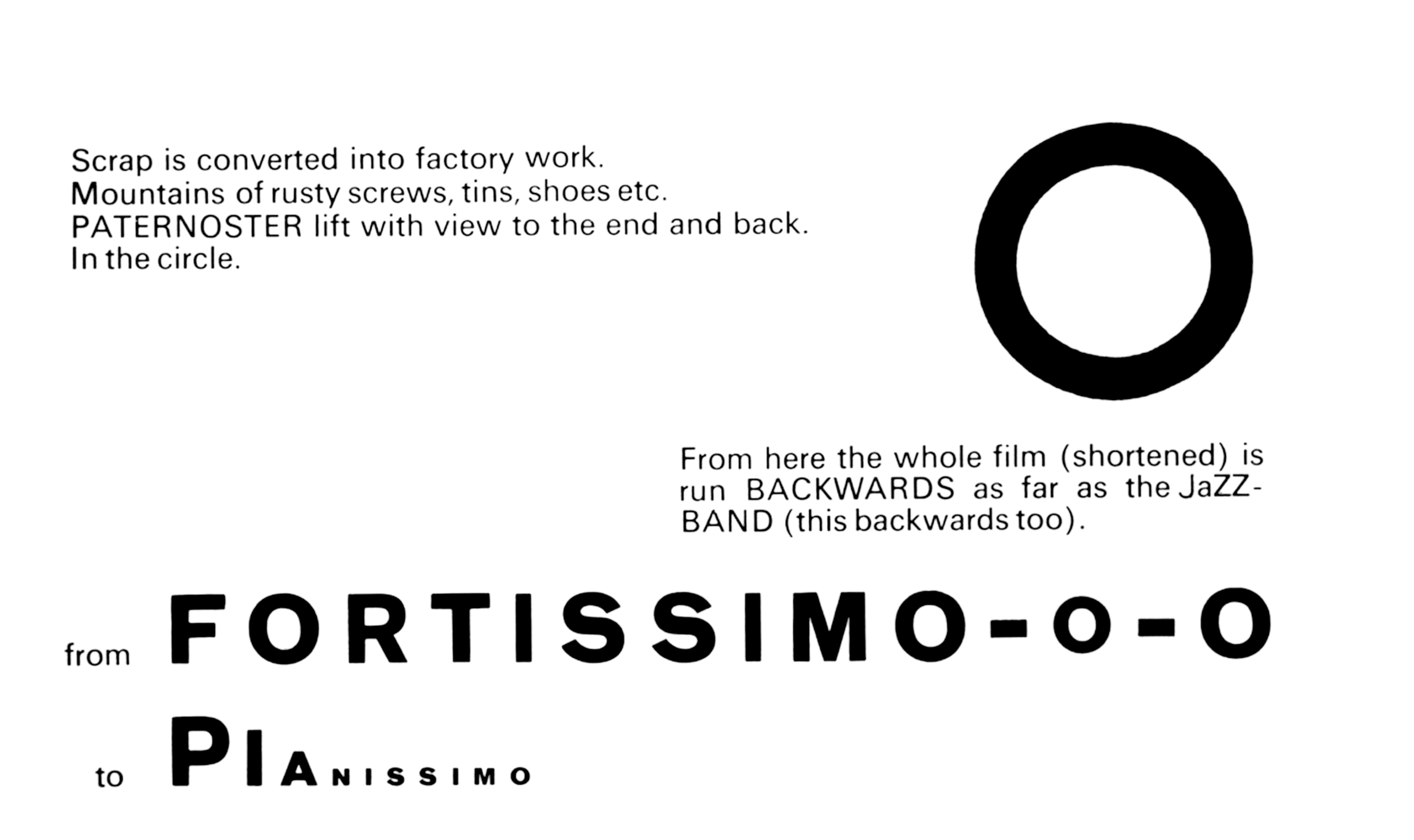
A few notes that struck me during the process:
- From a production standpoint, it is difficult to imagine his film being made prior to the rise of YouTube. It is rumored that Moholy-Nagy did not make Dynamik der gross-stradt due to the costliness of the vision. YouTube provides an extraordinary work-around. In fact, without a free, global, crowd-sourcing database of footage, an easy search-bar, and format conversion platforms, this endeavor would not have been possible. (At least not without significant financial support and the luxury of months, maybe even years.)
- On the other hand, YouTube and the proliferation of visual media in our lives adds to the challenge of identifying and extracting the “new” from the barrage. Even “digital shocks” that utilize current technology rather than invent new technology poses a problem: have we grown accustom to these modes and these sights? Luckily, unfamiliar relationships do not necessitate the never-invented, but, rather, are hinged on the never-tried, never-tested, never-seen. This is a newness born of dialecticism, where, like Benjamin’s tiger’s leap into the past, novel connections synthesize from past material as opposed to new material. Adorno echoes this sentiment, as he reframes the “new” as the eternal process of the renewing past. He explains, “The dynamic of the old pushes towards the new, which in turn is needed by the old, if the latter is to actualize itself.” Perhaps what is exposed is the myth of the “new” as something other than the forces of the old brewing with the conditions of the present and remerging. In this sense, the “new” is the past reinstituted; hence why German film scholar Anton Kaes makes the argument that archives are not actually of the past, but are of the future: these artifacts are awaiting their time of discovery. YouTube presents such an archive.
- The “final” product (I consider this cut to be in the draft stages) faithfully follows Moholy-Nagy’s outline, err- my interpretation of his outline. However, with every decision, I asked myself: Is there a right answer? Is it possible to make a mistake? Like words themselves, his script is highly interpretable. Is Moholy-Nagy’s understanding of “TEMPO TEMPO TEMPO” the same as mine? Probably not. And what about “kitsch”? In some ways the ambiguity of the script allowed for fidelity to be, at once, a loose, failure-resistant victory and a victory-resistant failure. Because a one-to-one likeness is impossible, I found myself doomed from the start. Yet, it is because I could never achieve the purity of his vision that liberated me from failure; an assurance that guided me through parts of the film that I regarded as weak or unsuccessful. Does the totalizing failure-success paradox exist in the avant-garde, in general? It seems that avant-garde movements – particularly movements characterized as an enterprise in rebellion – might carry a similar conceit, where even a mistake is perverse and, therefore, not a mistake at all.
- What is Moholy-Nagy and what is me? Any artistic voice that might be my own could only be recognizable in conjunction with other artists’ own productions of this script. From this standpoint, my voice – constituted within a sign system – bears a resemblance to Saussurean notions of language; only through difference can an understanding of my voice and my artistic style form.
While the fruits of this ‘produktion-reproduktion’ experiment may be questionable to some, I ask that we consider its value in relation to the production of knowledge more broadly. How might we seize “new, as yet unfamiliar relationships” through experimentation, through the collection of visceral knowledge gained from hands-on practice, and through reflections on the past that reshape that knowledge? It is here that I propose we embrace the allegory of Moholy-Nagy’s Dynamik der gross-stradt, not only in the pursuit of knowledge, but also in the produktion-reproduktion of the corollary promises it contains.
Image Credits:
- Excerpted pages from Moholy-Nagy’s Dynamic of the Metropolis script (author’s collage and screen grab)
- Juxtaposition of the video version and original page from Moholy-Nagy’s Dynamic of the Metropolis script (author’s collage and screen grab)
- YouTube excerpt of the last 3 minutes of Kelly Daniela Norris’s (Re)Production of Moholy-Nagy’s Dynamic of the Metropolis (author’s permission)
- Detail from the script that corresponds with a section of the video’s ending (author’s screen grab)
- Full version of Kelly Daniela Norris’s (Re)Production of Moholy-Nagy’s Dynamic of the Metropolis on YouTube (author’s permission)
- Moholy-Nagy, L. (1922). Produktion-Reproduktion. De Stijl, 5(7), 98–101
- Benjamin, W. (2003). On the concept of history (H. Eiland & M. W. Jennings, Eds.; E. Jephcott, Trans.). In H. Eiland & M. W. Jennings (Eds.), Walter Benjamin: Selected writings, volume 4: 1938–1940 (pp. 389–400). Belknap Press. (Original work written 1940)
- Adorno, T. W. (1997). Aesthetic theory (G. Adorno & R. Tiedemann, Eds.; R. Hullot-Kentor, Trans.). University of Minnesota Press, pg. 22 (Original work published 1970)
Could this idea of digital shocks eventually face the same problem as Moholy-Nagy’s original vision – becoming so familiar over time that its experimental force disappears? If so, does the value of the work ultimately depend less on the shock itself and more on continually finding new contexts in which to reactivate it?
Fascinating read! It’s wild to think that a 1920s avant-garde vision finally found the tools to come alive through YouTube archives a century later. I really loved your point about how liberating it was to let go of an exact replica and focus instead on creating new connections with today’s media. Great work and really thought-provoking experiment!
CyberWorldOps News
The discussion of *Dynamik der Gross-Stadt* is especially compelling in its focus on how the work’s script exposes the limits of reproducing avant-garde media across different formats. Framing experimentation as an epistemological method also clarifies how gaps and transformations in the surviving materials become part of the work’s historical meaning.
It also got me thinking about how digital tools today have changed the way we engage with and reinterpret older experimental ideas.
The discussion of *Dynamik der Gross-Stadt* is especially compelling in showing how the work’s dependence on its script exposes the limits of reproducing historical avant-garde experiments. The excerpt from Moholy-Nagy’s script also makes experimentation valuable not merely as a process, but as evidence of how the project’s meaning shifts across media.
The part about the avant-garde becoming a fetishistic object when it’s removed from its own moment stuck with me. It makes sense that the shock would eventually wear off and turn into something else entirely. I also found the point about YouTube acting as an archive for the future interesting. It’s a strange way to think about old footage waiting to be discovered again.
The part about the shock transferring to the work’s own historicity really stuck with me. I hadn’t thought about how an avant-garde piece can end up feeling like a fetish object instead of something revolutionary. The point that the “new” is really the old recombined also makes sense. It’s interesting that the script’s ambiguity made a perfect copy impossible from the start.
The part about the script being so open to interpretation really stood out to me. It makes sense that fidelity becomes almost impossible when every word could mean something different to each person. I also found the idea of YouTube as an archive of the future interesting. That feels true for a lot of old experimental work that only finds an audience much later.