Disney+ and the Franchising of Original Korean Series
Benjamin M. Han / University of Georgia
The launch of Netflix in Korea in 2016 has reconfigured the Korean media industry in many different ways, particularly in terms of financing, genre diversification, and intellectual property rights. As a result, there is a growing body of scholarship focused on the impact of Netflix on the transnational circulation of Korean media. While much of the discussion has centered on the global success and popularity of Netflix original series such as Squid Game (Netflix, 2021-2025) and The Glory (Netflix, 2022-2023), less scholarly attention has been given to how Disney+ is shaping the Korean media industry.
Compared to Netflix, Disney+ has not experienced as much success with its original Korean series. Nonetheless, the global streaming platform has continuously invested in the production of Korean content, releasing a steady lineup of original series that spans different genres, especially crime thrillers. At an event held in Hong Kong in 2025 to unveil Disney+’s lineup of forthcoming Korean series, actor Ju Ji-hoon, while introducing the upcoming series The Remarried Empress (Disney+, 2026), stated, “I was attracted by this world that embraces East and West, crossing races and cultures. I was curious about what it would mean for me to take part in this world.”1 Additionally, Luke Kang, president of Disney Asia Pacific, described Disney+’s strategy with the following words, “Our long-term ambition is to scale originals from Asia Pacific into global franchises, leveraging our ecosystem of IP, talent and platforms.”2
Ju’s statement speaks to Disney+’s long prevailing industrial practice of franchising to contribute to world building, as it aims to expand its library and generate new economic value from existing intellectual property (IP). Accordingly, Disney’s approach to Korean content involves reconfiguring the scale of Korean series through the use of large budgets and high-profile stars. While Netflix emphasizes its commitment to the production of culturally authentic Korean series rooted in localism, Disney+ focuses on constructing a shared media universe within the crime thriller genre, often drawing on noir aesthetics. Former Disney CEO Bob Iger defined a media franchise as “something that creates value across multiple businesses and multiple territories over a long period of time.”3 As Derek Johnson notes, media franchising should be understood as “reproducing familiarity” rather than big media, synergy, or creativity bankruptcy.4 Particularly for Disney+, the reproduction of familiarity is achieved through the repeated casting and circulation of the same male star in its original Korean series instead of creating prequels, sequels, or spin-offs.
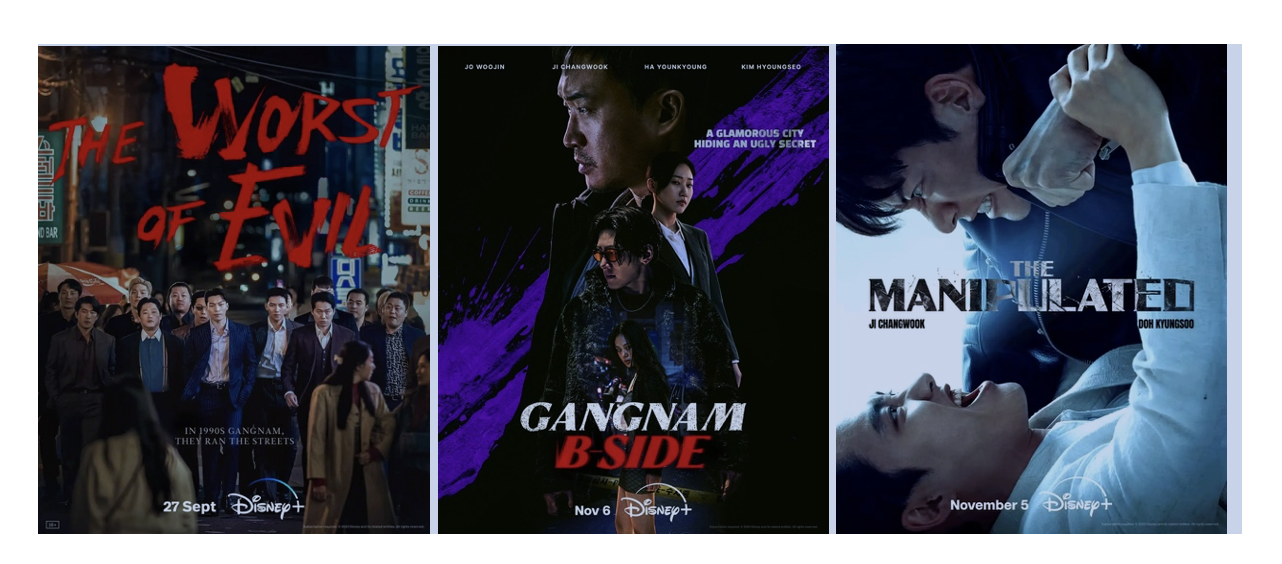
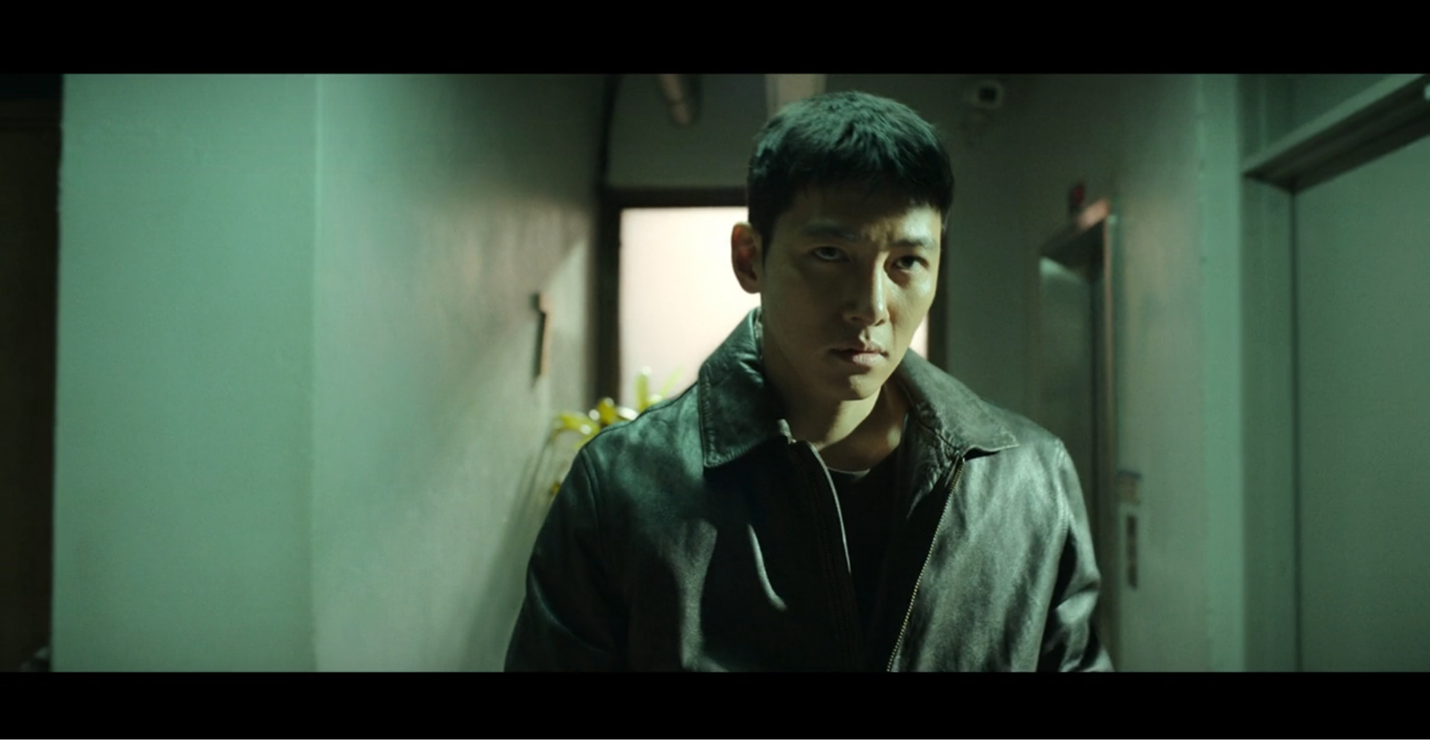
For example, actor Ji Chang-wook has appeared prominently in several Disney+ original series, including The Worst of Evil (Disney+, 2023), Gangnam B-Side (Disney+, 2024), and The Manipulated (Disney+, 2025), which were released over a three-year period. While there are no explicit intertextual references between the three series, the reproduction of familiarity through Ji’s recurring presence helps to formulate a shared universe through the characters that he plays in the series. In The Worst of Evil, actor Ji plays a police officer who infiltrates a criminal organization operating in Gangnam in the 1990s to track down an illegal drug trafficking trade between Korea, China, and Japan. His character is depicted as a relentless officer who is willing to sacrifice his life in pursuit of justice. The series employs a gritty and dark visual style common in the noir genre, further using violence to portray the male-dominated world of organized crime.
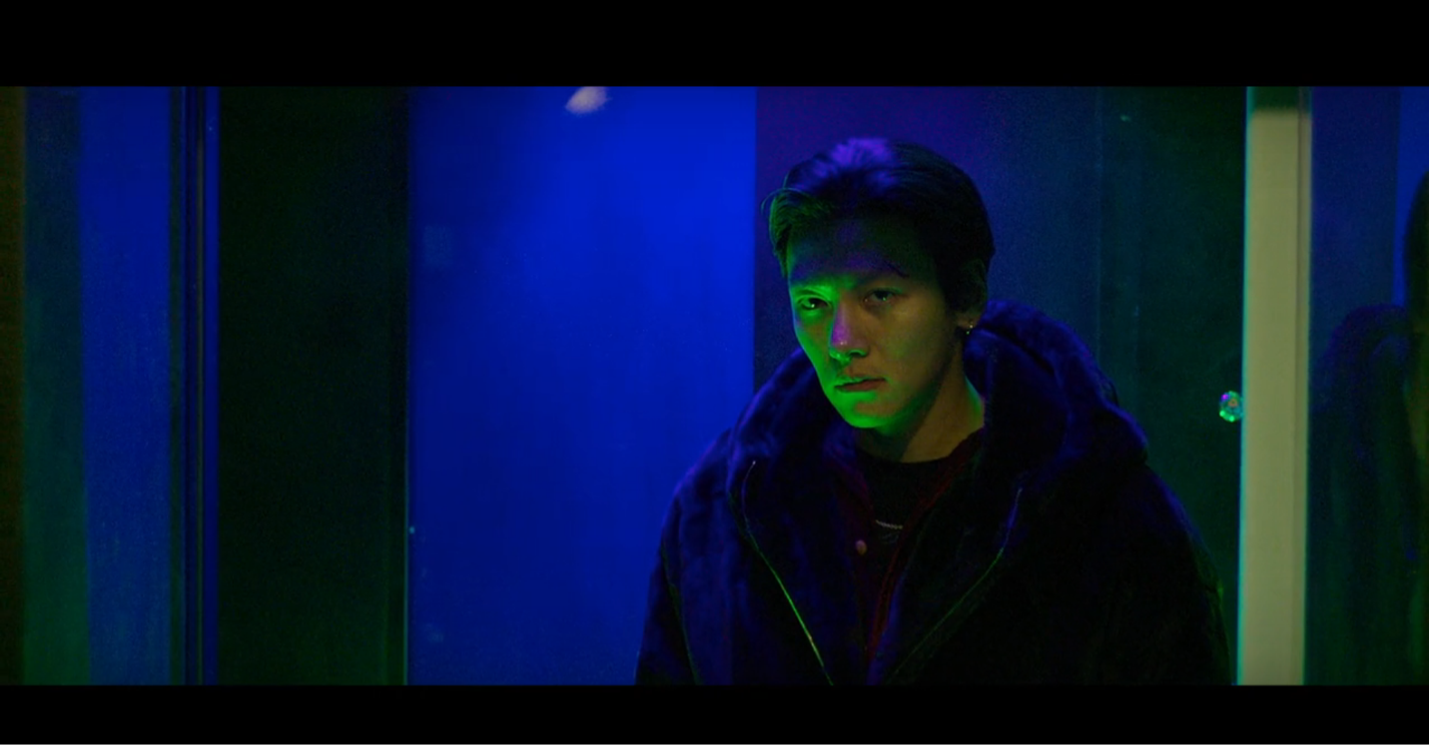
Similarly, in Gangnam B-Side, Ji continues the same shared universe set in Gangnam where he plays the character of a broker who assists a detective in search for a missing woman named Jae-hee. Both series explore the dark underworld of Gangnam, an affluent district in Seoul often associated with luxury and glamour. Gangnam B-Side not only reveals the world of drugs, but Ji extends the trope of his previous character as a tough and unyielding figure who wants to take revenge on the powerful elites responsible for crimes and corruption. While Ji does not reprise the role from The Worst of Evil, audiences feel like they are watching multiple iterations of a single character archetype.
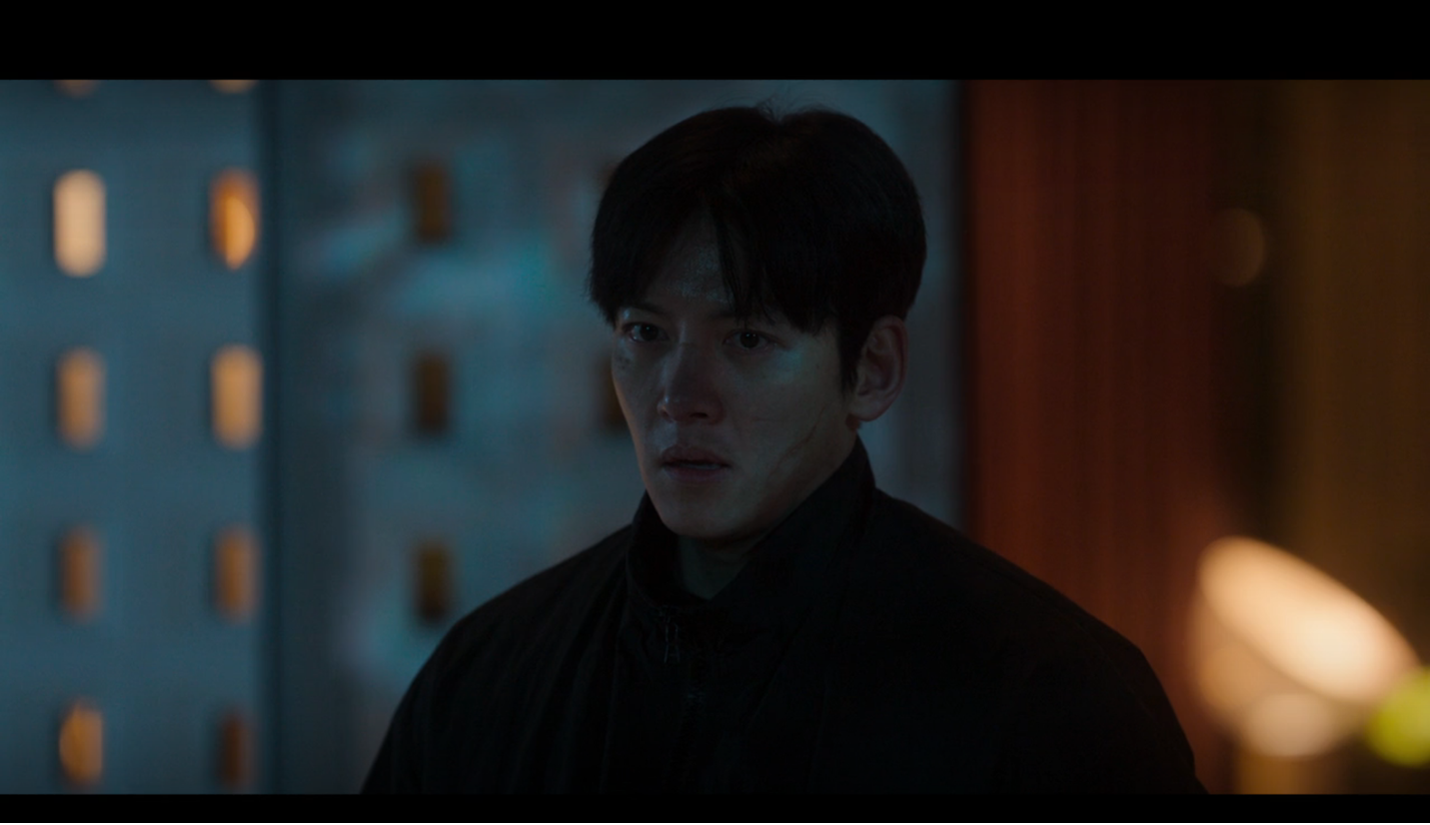
Interestingly, both The Worst of Evil and Gangnam B-Side were produced by Sanai Pictures, a production company that produces content catered to male audiences, whose previous hit films include New World (Park, 2013) and A Violent Prosecutor (Lee, 2016). In the more recent original series, The Manipulated””the television adaptation of the 2017 film Fabricated City (Park)””Ji reprises the same character. The Manipulated operates within the same crime thriller genre and again portrays Ji as a figure willing to go to extreme lengths to take revenge on those responsible for his wrongful accusation.
Moreover, actor Kim Jong-soo appears in both Gangnam B-Side and The Manipulated playing very different roles while contributing to the shared universe across the series. As Nitin Govil’s work on Hindi cinema franchises illustrates, these three original Korean series as a media franchise “consolidate male star power in the industry, prioritizing the proximity of celebrity over the narrative continuity centered by Hollywood.”5 Govil further writes that “stardom functions through imagined worlds of intimate connection, which is why crossover appearances from an identifiable male star can be used to expand a franchise into a shared universe.”6 The recurring presence of Ji in several original Korean series is not limited to male leads. Disney+ has also used a similar strategy in the casting of villains to expand its shared universe. For instance, Lee Kwang-soo plays the character of a wealthy, morally corrupt businessman in The Manipulated, whose behaviors are more reminiscent of a gangster. In the series, Lee collaborates with Yo-han (Doh Kyung-soo) to frame Park Tae-jung (Ji Chang-wook) for a murder that he committed. Lee will play a similar role of an executive in the upcoming Disney+ original series titled Gold Land (Disney+, 2026), further reproducing and extending his previous villain character.
These original Korean series on Disney+ illustrate how the streaming service seeks to capitalize on media franchising through a shared universe centered on intertextuality involving male stars. As Kyra Hunting and Jonathan Gray write, industrial intertextuality “offers much more than simply a library; instead, it provides a coherent world of content.”7 It further highlights the platform’s emphasis on the masculine attributes of Korean serials to attract global male audiences. More importantly, Disney+’s original Korean series underscore the gendered dimensions of media franchising in the streaming era.
Image Credits:
- Three different Disney+ original Korean series starring actor Ji Chang-wook (The Worst of Evil, Gangnam B-Side, and The Manipulated)
- Ji Chang-wook as an undercover cop in The Worst of Evil (2023) on Disney+ [author’s screen grab]
- Ji Chang-wook as a broker in Gangnam B-Side (2024) on Disney+ [author’s screen grab]
- Ji Chang-wook as a wrongfully accused murderer in The Manipulated (2025) on Disney+ [author’s screen grab]
- Byung-yeul Baek, “K-Dramas Take Center Stage in Disney+ Global Expansion Strategy,” The Korea Times, November 13, 2025, https://www.koreatimes.co.kr/entertainment/shows-dramas/20251113/k-dramas-take-center-stage-in-disney-global-expansion-strategy.) ↩︎
- Baek, “K-Dramas Take Center Stage in Disney+ Global Expansion Strategy.” ↩︎
- Richard Siklos, “Bob Iger Rocks Disney,” Fortune 159 no. 1 (2009): 80-86. ↩︎
- Derek Johnson, Media Franchising: Creative License and Collaboration in the Culture Industries (New York University Press, 2013), 89. ↩︎
- Nitin Govil, “When Stars Align: The Shared Universes of Hindi Franchise Cinema,” Film Quarterly, 79, no. 2 (2025): 59, https://doi.org/10.1525/fq.2025.79.2.57.) ↩︎
- Nitin Govil, “When Stars Align: The Shared Universes of Hindi Franchise Cinema,” 59-60. ↩︎
- Kyra Hunting and Jonathan Gray, “Disney+: Imagining Industrial Intertextuality,” in From Networks to Netflix: A Guide to Changing Channels, ed. Derek Johnson, 2nd ed. (Routledge, 2023), 374. ↩︎
This was such a sharp and engaging analysis of Disney’s growing involvement in Korean original series and how franchising logic is reshaping global streaming culture. I really appreciated how it breaks down the idea that “franchise value” isn’t just about sequels or spin-offs, but about creating familiarity, repeatable aesthetics, and recognizable stars across different series.
The discussion of how Disney+ builds a kind of shared universe through recurring actors and genre patterns in Korean dramas really stood out—it shows how industrial strategy quietly influences storytelling forms. It’s a great reminder that global streaming platforms aren’t just distributing content, they’re actively shaping how stories are structured, branded, and consumed across cultures.
Appreciate this amazing info!! I really liked every bit of it I have you bookmarked to look out new things you post