The Rest of the Remains: The East Marshall Street Well Oral History and Memorialization Project
Dr. Christine Cynn & Maggie Bertsche / Virginia Commonwealth University
*This article includes references to the mistreatment of human remains.
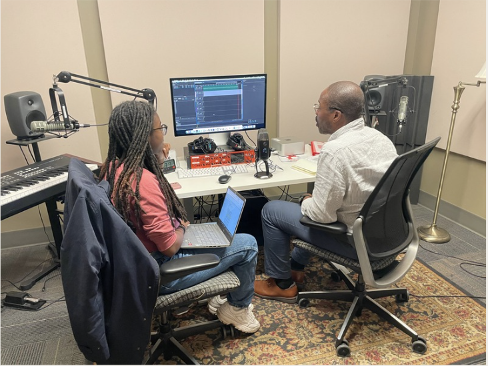
Our fall essay examined the nineteenth-century theft of Black bodies by the institution now known as Virginia Commonwealth University (VCU) Medical Center for anatomical study. It further explored contemporary efforts to draw attention to and demand redress for that violence. This essay shifts focus to analyze some of the complexities of creating the Health Humanities Lab’s East Marshall Street Well (EMSW) Oral History and Memorialization Project at VCU’s Humanities Research Center.
The EMSW Oral History and Memorialization Project amplifies the priorities around memorialization and education of the EMSW Project’s Family Representative Council, a group of mostly African American community leaders who symbolically represent the descendants of more than 50 people whose remains were discovered in the EMSW during the 1994 construction of a VCU medical building. As part of broader struggles toward institutional accountability, over three academic years (from fall 2023 to spring 2026), undergraduate and graduate student fellows, postdoctoral scholars, community, and faculty collaborators have participated in the creation of memorialization projects and an oral history repository that preserves not the voices of the exploited, who remain unidentified, but the evolving practices of memorialization. Interdisciplinary and intergenerational, the projects prepare students, including future healthcare professionals, to grapple with histories of violence not as resolvable pasts, but as ongoing ethical obligations.
An Archive of Process
The EMSW Oral History and Memorialization Project confronts a conundrum. The individuals, mostly of African descent, whose remains were unearthed in 1994, were illegally obtained from adjacent Black cemeteries in the antebellum nineteenth century by staff and faculty from the Medical College of Virginia (later VCU Medical Center). The bodies were used for medical training and research and then discarded. In a publicly available repository of recorded oral histories, the EMSW Oral History Archive aims to fill gaps in the historical record not by recording the stories of individuals exploited for medical use. Instead, it chronicles the conditions that made the gaps possible and preserves the EMSW Project‘s ongoing work of contending with communal losses.
Guiding questions posed by the interviewer, Ana Edwards, situated the FRC members’ participation in the EMSW Project within personal and collective Richmond histories. The interviews ranged as widely as the city’s history itself, moving between childhood memories, family stories, and experiences of segregation alongside the FRC members’ accounts of their work on the project. For example, FRC member Stephanie Smith recalled her grandmother constructing her own cinder block house in a Northern Richmond suburb “established so the people who did the domestic work in Ginter Park could get to work.” She also recounted her treatment at MCV as a child when she dislocated both hips and her attendance as one of the first African American students at John Marshall High School, experiences that provide essential context about her commitment to the EMSW Project and about the continuing effects of the histories made starkly visible by the Well’s discovery.
In his oral history, Michael Blakey, National Endowment for the Humanities Professor of Anthropology, Africana Studies and American Studies and director of the Institute for Historical Biology at the College of William & Mary, discussed his role directing the African Burial Ground Project in New York. Foregrounding the central importance of informed consent from what he terms descendant communities in the ethical burial of remains, he defines the “clientage model or the ethical clientage model, in which we work for descendants not with them,” a model that he sought to apply on the EMSW Project.
FRC member Carmen Foster noted that for the FRC, the central priority was less on scientific research than on respectful and dignified interment. She further underscored the role of the community in efforts to work with the university to address the significance of the broader histories of the EMSW: “So for me, the FRC, as far as I’m concerned, we do our duty when the bones rest. But the vision has to come from the community itself, and how it leverages advocacy to be in partnership with VCU to say: this is part of a larger story.”
The EMSW Oral History Archive documents how participants attempt to understand and decide how to respond to the past from their different vantage points as community members, academics, administrators, staff, and students. It thereby constitutes an archive of process, of how individuals and institutions wrestle with historical harm through personal, collective, and professional experiences and exchanges. The archive preserves the evolving ethical questions surrounding memorialization, identification, and institutional responsibility, and the efforts to interpret and respond to them.
What Students Carry Forward
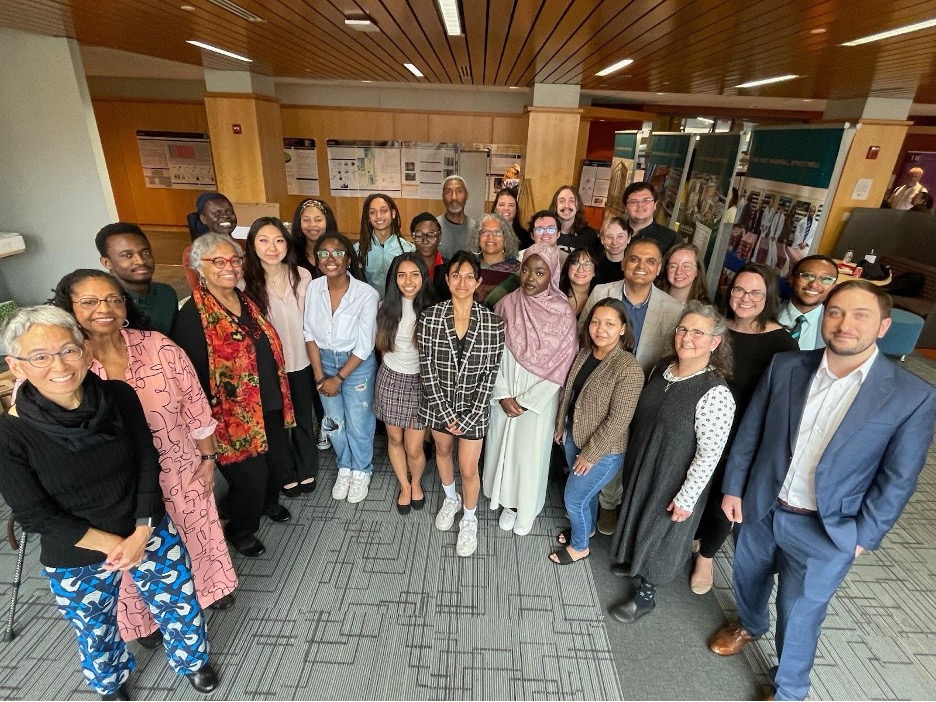
Students play a central role in the EMSW Oral History and Memorialization Project. Ten undergraduates participated in the project in the first year; those who did not graduate continued into subsequent years, and some younger students were added. The continuing undergraduate fellows helped mentor the new fellows; postdoctoral fellows (from 2024-2025), who guided undergraduate and graduate fellows, were, in turn, supervised by faculty members. The lab fellows processed oral history interviews, recorded student interviews, created podcasts, coordinated exhibitions featuring educational panels, and produced a digital walking tour and a timeline of lab activities, which were posted on a project website. They further helped organize and participated in public events and academic conferences to discuss the history of the EMSW and their work on the project. Through the project, students learned to listen carefully and with humility to community perspectives, to share ideas publicly, and to recognize how to attend to silences in formal records.
By participating in the project, students-particularly those preparing for careers in medicine, public health, or related fields-came to understand that the history of grave robbing and anatomical exploitation is not part of a resolved past but continues to shape how the community relates to medical institutions today.
Public Memory and Institutional Accountability
The EMSW Oral History and Memorialization Project was designed to be accessible beyond the university and to invite community members to engage with the site’s history and ongoing memorialization efforts. Public-facing initiatives ensure that the archive operates as a living resource for community dialogue and potentially, a model for other institutions confronting similar legacies of medical racism and exploitation.
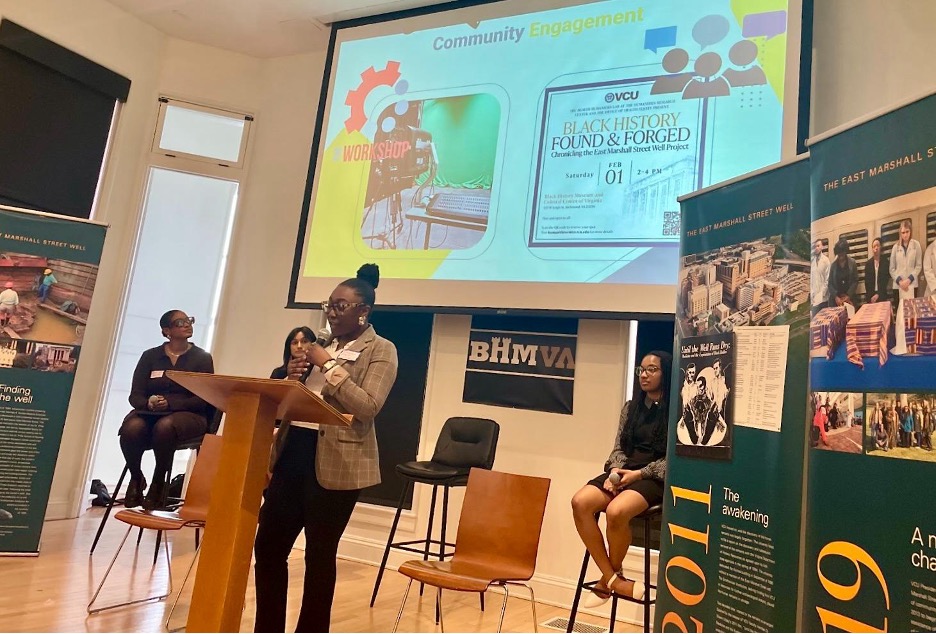
The digital walking tour, for example, enables visitors to explore the historical landscape surrounding the EMSW and the former Medical College of Virginia campus. Public events bring together historians, medical professionals, students, FRC members, and community members to discuss questions raised by the EMSW. In these spaces, the archive becomes a platform for collective reflection about how institutions should respond to histories of violence embedded within their own foundations. These methods contribute to forging living relations that honor the dead and to shaping a different future of care.
Still Unburied
The EMSW Oral History and Memorialization Project suggests a different kind of humanities practice, one that invites students, faculty, staff, community members, and institutions to grapple with unresolved histories that continue to shape the present.
We want to conclude by amplifying some of the FRC recommendations. As of 2025, many of the FRC recommendations for the EMSW Project remain only partially realized. The full list of institutional updates related to the FRC recommendations is publicly available through VCU’s EMSW Project website. While meaningful progress has been made toward ethical research, community engagement, and the return of ancestral remains from the Smithsonian to VCU, significant portions of the FRC’s 2018 plan remain unfulfilled. Most notably, the remains of the people discovered more than three decades ago have still to be interred.
Image Credits:
- East Marshall Street Well Oral History and Memorialization Project undergraduate fellows record a podcast. Courtesy of the Health Humanities Lab, Virginia Commonwealth University.
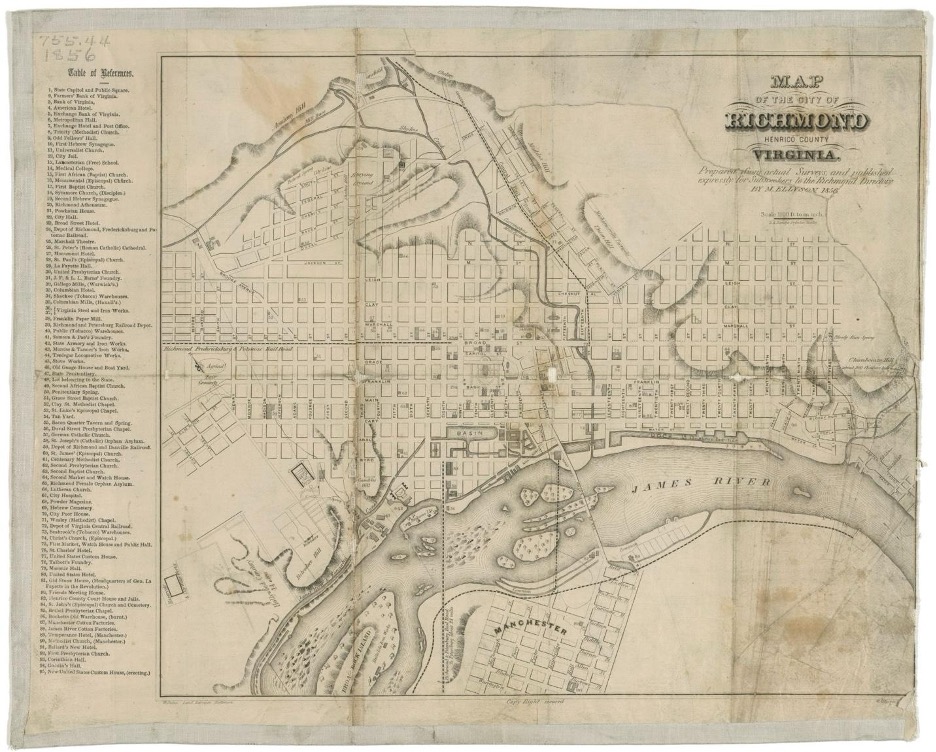
- Ellyson, M., and William Sides. Map of the City of Richmond, Henrico County, Virginia, Prepared from Actual Surveys and Published Expressly for Subscribers to the Richmond Directory. Baltimore: W. Gillespie, sc., 1856. Library of Virginia, Virginia Memory. https://rosetta.virginiamemory.com/delivery/DeliveryManagerServlet?dps_pid=IE3527048. Courtesy of the Library of Virginia.
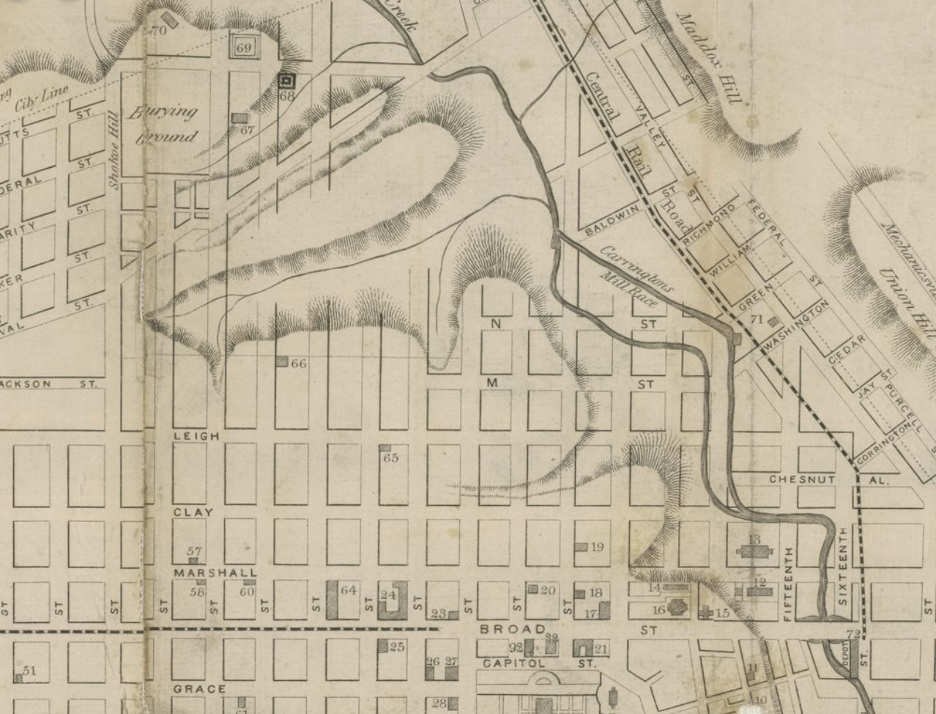
- Detail showing the former Medical College of Virginia (no. 14) and the First African Baptist Church (no. 15). The Shockoe Hill African Burial Ground, where some of the bodies discovered in the EMSW were thought to have been procured, is near the upper left. Ellyson, M., and William Sides. Map of the City of Richmond, Henrico County, Virginia, Prepared from Actual Surveys and Published Expressly for Subscribers to the Richmond Directory. Baltimore: W. Gillespie, sc., 1856. Library of Virginia, Virginia Memory. https://rosetta.virginiamemory.com/delivery/DeliveryManagerServlet?dps_pid=IE3527048. Courtesy of the Library of Virginia.
- Black History Found and Forged: Chronicling the East Marshall Street Well Project. Symposium at the Black History Museum and Cultural Center of Virginia, February 1, 2025. Courtesy of the Health Humanities Lab, Virginia Commonwealth University.
- The Afterlives of Medical Exploitation: The East Marshall Street Well Project Symposium. Virginia Commonwealth University, April 24, 2024. Courtesy of the Health Humanities Lab, Virginia Commonwealth University.
You’re so awesome! I don’t believe I have read a single thing like that before. So great to find someone with some original thoughts on this topic. Really.. thank you for starting this up. This website is something that is needed on the internet, someone with a little originality!
A thoughtful and well written piece!
The Indiramma Housing Scheme 2026 is a flagship housing program launched by the Telangana Government to provide permanent homes to homeless and low-income families. Under the Indiramma Housing Scheme, around 4.5 lakh houses will be built with essential facilities such as an RCC roof, a kitchen, and a toilet, ensuring safe and dignified living conditions. Eligible families can receive financial assistance of up to ?5 lakh, released in stages to support house construction. With a total budget of ?22,000 crore, the Indiramma Housing Scheme aims to improve living standards by helping eligible families build secure homes, including those who already own land but do not have enough financial resources to construct a house.
I like using Where Is My Train before going to the station because it helps me check important train information in a simple way.