Livestreaming the K-pop Concert: Netflix, BTS and the Challenges of K-pop
Jennifer M. Kang / Queensland University of Technology
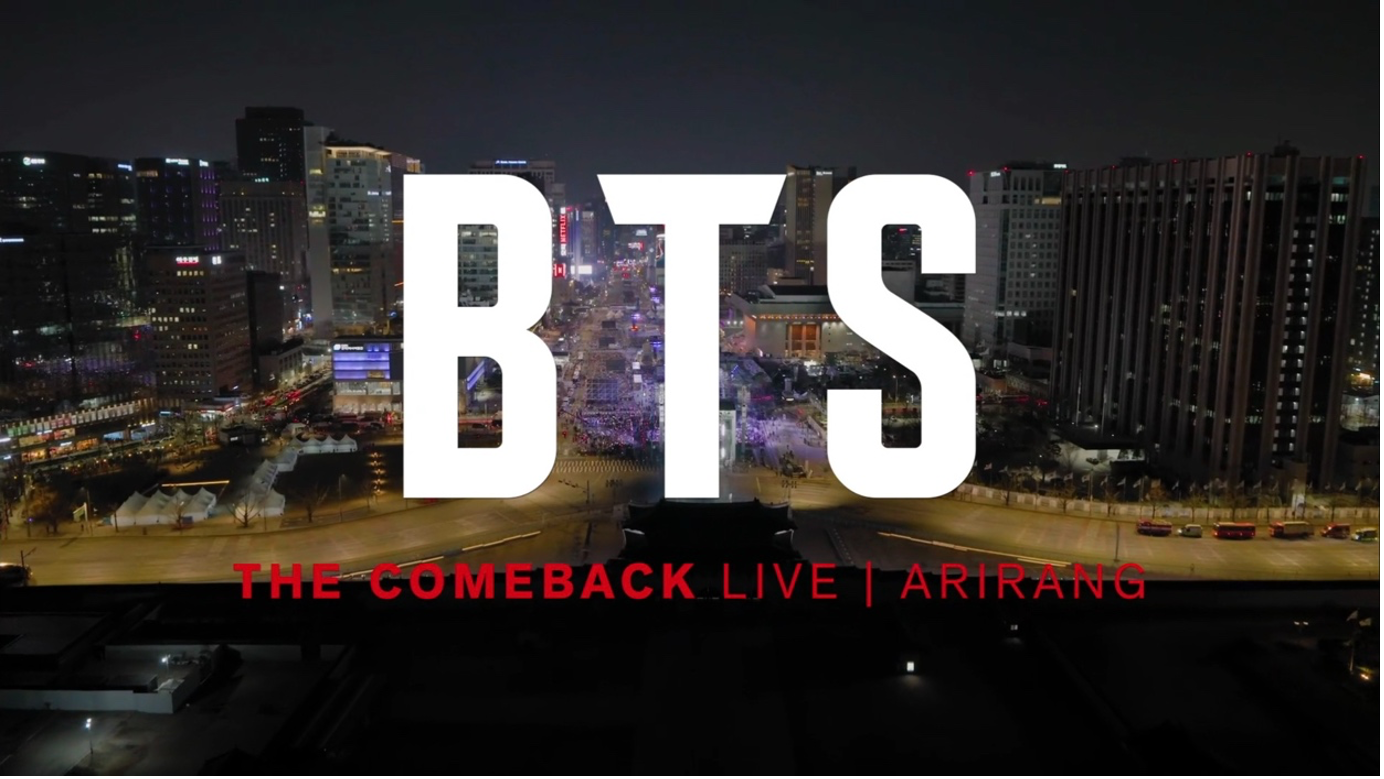
Netflix’s latest move has been venturing into livestreamed events, as seen with Skyscraper Live, and The Artemis II Lunar Flyby. The most notable attempt was its first K-pop concert livestream: BTS’s comeback stage in March 2026. The seven-member group returned with a new album after a four-year hiatus due to Korea’s mandatory military service, and Netflix exclusively streamed the entire concert from Seoul. These factors suggest the livestream was more than a simple experiment with a new content category. BTS The Comeback Live: Arirang revealed tensions between multiple stakeholders, raising a broader question about how a culturally specific experience, like the K-pop concert, can be translated into globally scalable content.
This question is complicated by key stakeholders whose interests did not neatly align. HYBE (BTS’s label), the Seoul Metropolitan Government, and Netflix, would have all seen the event’s potential, which was guaranteed to be a global success given BTS’s fame. For HYBE, it was a chance to re-establish BTS’s position as a global icon after a long hiatus, hence the loaded references to Korean culture in their stage (performing in front of historical landmark Gyeongbokgung Palace) and album (inspired by the traditional folk song Arirang). Seoul saw the opportunity to promote the city by featuring its landmarks in the livestream, and Netflix could tap into the global K-pop fandom, which is known to be fiercely loyal. This left me questioning who the expected audience was for this event, and who was supposed to be satisfied or prioritized in this concert livestream.
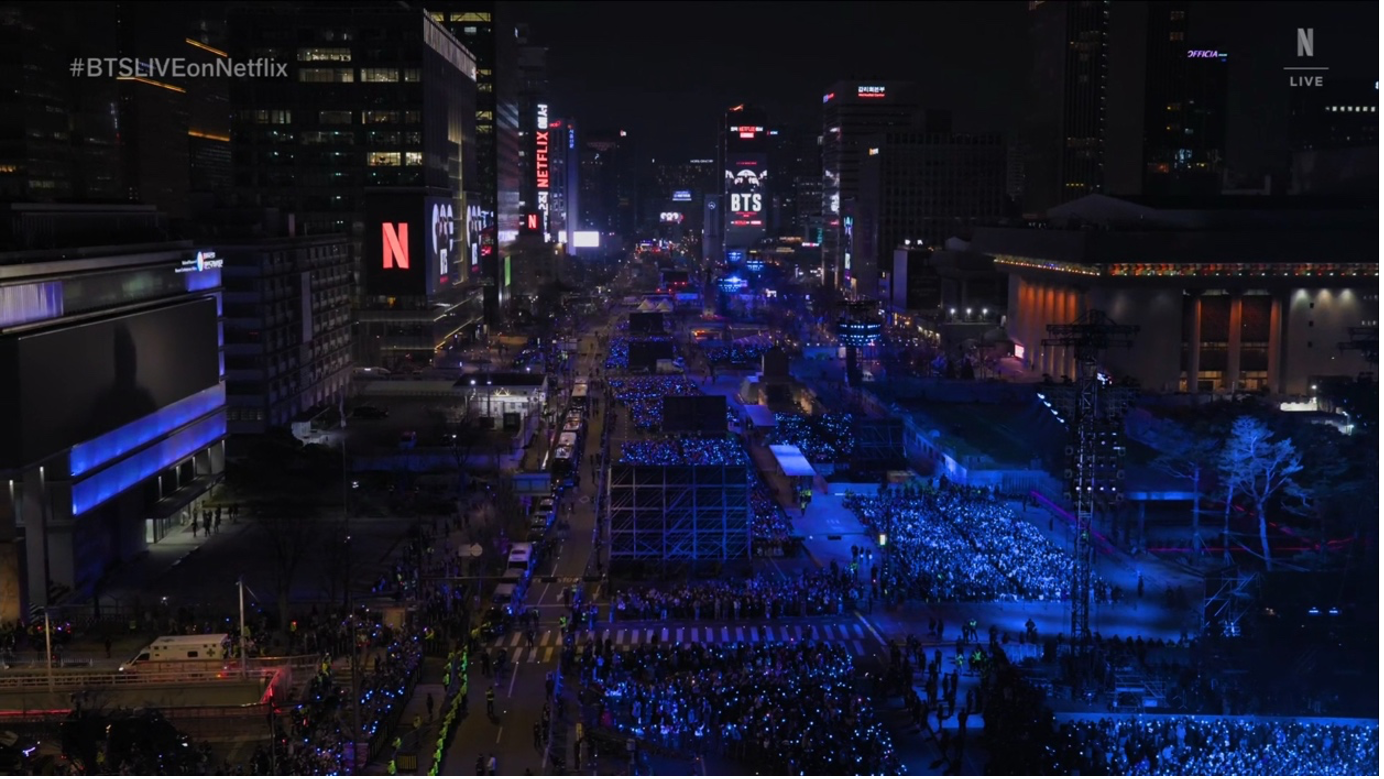
These differing desires of key stakeholders could be seen in the livestream coverage. There were numerous overhead shots showing the landmarks around Gwanghwamun Square, like the Sejong Performing Arts Center and Kyobo Life Insurance Building. The digital billboards around the Square displayed the Netflix logo and trailers of the upcoming Netflix documentary on BTS’s comeback. The crowd was tightly controlled by the local police force, visible on screen in their neon vest uniforms, alongside empty streets and restricted areas. Subscribers tuning into the comeback show repeatedly saw these wide-angle shots. These visual choices suggest the concert functioned as much as a promotional vehicle for the city and Netflix as it did a live performance.
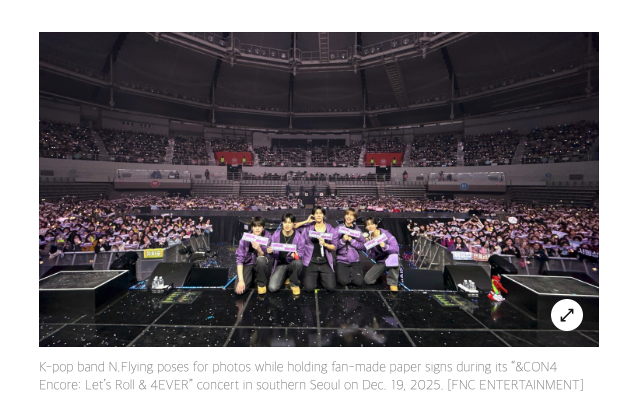
To me, as a long-time K-pop fan (although not of BTS), I did not feel that this event was for K-pop fans. For fans, K-pop concerts are more than spaces to enjoy live music. They function as places to experience the feeling of rapport that emerges among attendees (Kim, 2018). This sense of community is cultivated through concert rituals that occur both inside and outside the venue. There are pre-concert practices like handing out fan-made merch (hand-held banners, photocards), cover dance groups performing outside, and exchanging merchandise to obtain preferred items (Liew, 2025). Fans bring their official lightsticks and use them throughout the concert. It is also common to plan a “fan event” during the concert, where fans will hold up a banner at a specific moment and sing to the group. Through these shared practices, the concert becomes a collective experience rather than simply a place to listen to music.
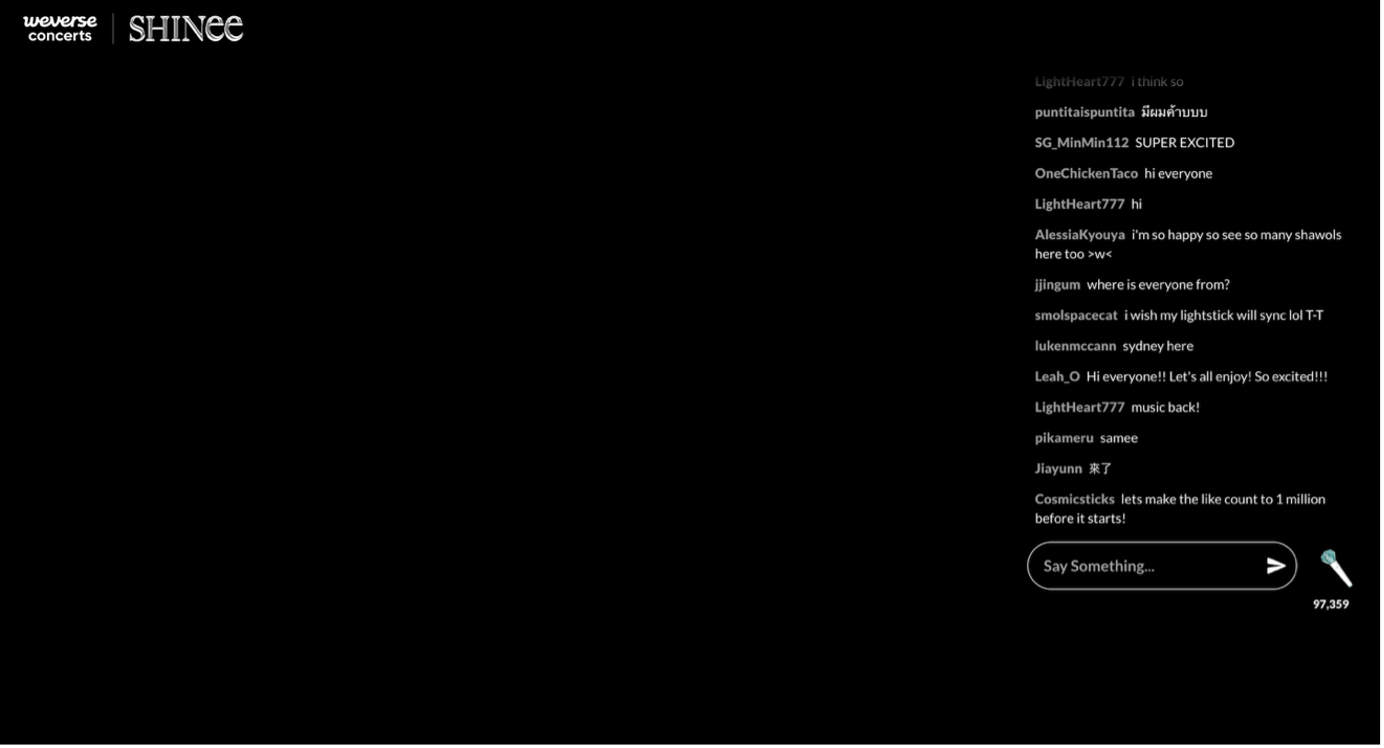
There are homegrown K-pop concert streaming services that cater to this specificity of K-pop fan culture. The most well-known platform, Beyond Live, offers a shared sense of community for online viewers. When a concert is livestreamed, fans can communicate through a chatbox function, creating a feeling of togetherness. Fans can even use virtual lightsticks in the chat, mimicking the concert fan rituals. Beyond Live also streams the venue before the concert begins, allowing viewers to witness the excitement of audiences engaging in pre-show rituals such as testing their lightsticks and singing along to background music playing at the venue. The livestreams also include the audience sound, making fan chants and singing clearly audible. In this sense, streamers like Beyond Live are structured around fan practices and culture.
Very little in the BTS livestream indicated that it was planned with these fan practices in mind. Of course, fans may have felt moments of pride and unity when overhead shots captured audiences holding up purple lightsticks (BTS’s official color). The event itself holds great meaning for BTS fans, as it is the group’s comeback performance after a long break and the first K-pop act to be live on Netflix. However, Netflix’s audio prioritized the stage performance, making it difficult to hear fan chants or cheers. Its interface does not allow real-time interaction, unlike Beyond Live, reinforcing a linear viewing experience. Moreover, Netflix’s exclusive rights meant that filming and sharing clips of the event were controlled, further limiting the participatory and social dimensions that typically define K-pop fan experiences.
Then, was this event catering to non-K-pop fans – the casual viewer who might be curious about BTS or K-pop more broadly? There have been free public concerts in Seoul before, most notably PSY’s concert held after Gangnam Style went viral in 2012. This event reportedly gathered 80,000-100,000 people at the Seoul Plaza and over 1.6 million via the YouTube livestream (Jung & Li, 2014). The concert footage shows a packed crowd singing along with PSY and performing the iconic horse dance together. At the time, PSY represented a breakthrough moment for Korean popular music, and this widespread recognition was reflected in the enthusiastic crowd. This example illustrates how a publicly facing concert can successfully mobilize fans and non-fans through shared cultural significance and collective participation.
The BTS concert, however, centered on promoting a new album, meaning that most of the songs performed were unfamiliar to casual viewers. Unlike PSY’s concert with its widely recognized hits, this performance offered fewer entry points for non-fans. A Netflix exclusive livestream did not significantly expand the reach of an already globally popular act. Without widely recognized songs or moments of shared cultural meaning, the BTS livestream offered limited appeal to those outside the existing fanbase.
Furthermore, government authorities implemented extreme safety measures to ensure that Seoul could host this much-hyped global event smoothly. The police closed Gwanghwamun Square and surrounding areas several days prior, installing portable metal detectors at multiple access points. Only those with pre-booked tickets were allowed to enter the seating space in front of the stage. This high degree of security transformed what could have been an open cultural event into a tightly controlled one. It was difficult for fans to engage in concert rituals at Gwanghwamun Square in these circumstances. The excessive control also ended up deterring casual passersby at the Square as well as viewers at home expecting the spectacle of an enthusiastic, packed crowd enjoying the concert.
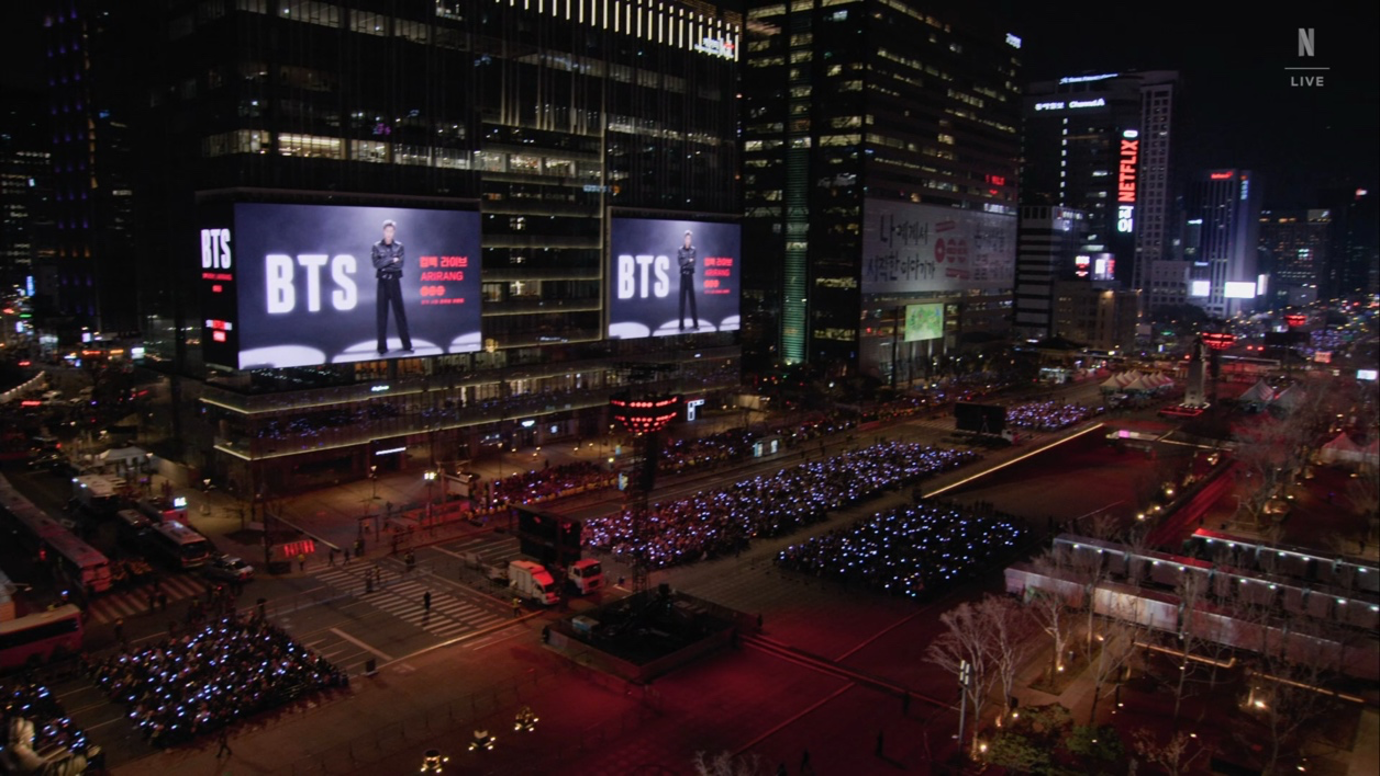
What emerged from these various tensions was a K-pop concert that struggled to satisfy any specific audience. By now, it is well known that Netflix’s original content strategy is to invest in scripted series that are transnationally appealing but localized enough to suggest cultural authenticity (Jenner, 2026). But this strategy does not easily to translate to Netflix’s livestreams, which has so far focused on improving technical capacities like traffic management and image quality. This limitation becomes evident in K-pop concerts, which are not simply performances to be watched, but experiences defined by participatory practices and affective relationships that extend beyond the stage.
This disconnect was evident in the viewing experience. Watching the livestream, I found it unsatisfying, even though everything appeared to be working as intended. The concert was carefully planned, produced, and globally accessible, yet it felt distant in ways K-pop concerts usually do not. This discontent raises questions about what “localization” might mean for live content. What does it mean to localize when the content is not scripted, but live and performed? Netflix’s approach shows one way to livestream, but it is unclear whether it can capture the unique characteristics of K-pop concerts. Whether the K-pop industry adapts to Netflix or continues to rely on specialized streamers like Beyond Live will reveal more about the possibilities and limits of global livestreaming.
Image Credits:
- Netflix’s first K-pop concert livestream (author screenshot)
- Overhead shots of Gwanghwamun Square (author screenshot)
- N.Flying and fans holding fan event banners (author Screenshot)
- Beyond Live interface (author screenshot; shows “Weverse concerts” as tickets were bought via Weverse fanclub)
- PSY’s Gangnam Style performance
- Highly controlled Gwanghwamun Square during livestream (author screenshot)
Jenner, M. (2026). “Between grammars of transnationalism and hyper-localisation: Strategies of Netflix and Amazon in transnational streaming.” Convergence, 13548565251409847.
Jung, S., & Li, H. (2014). “Global Production, Circulation, and Consumption of Gangnam Style.” International Journal of Communication, 8, 20-20.
Kim, S.-Y. (2018). K-pop Live: Fans, Idols, and Multimedia Performance. Stanford University Press.
Liew, K. K. (2025). “Outside your area: Negotiating K-pop fan zones in a Blackpink concert.” East Asian Journal of Popular Culture, 11(2), 235-255.
While Netflix delivered an impressive production with cinematic visuals, I also felt that many of the intimate fan-centered elements, such as crowd interactions, fan chants, and the sense of community, were pushed into the background.
Good stuff! Shared this with a friend who’d find it useful.