Journey to the East: Woman Fan Subject, Self-Identity, and Romance
David C. Oh / Syracuse University
In just the first few months of 2026, Netflix has released a movie, a reality television dating show, and a mini-series that feature stories of fans and their journey to South Korea to find love, purpose, and self-identity. These include, in order of release, My Korean Boyfriend (Meu Namorado Coreano), The Gangnam Project, and Made in Korea. Prior to this recent upsurge, there was Dramaworld (2016-2021), a story about a Californian woman fan who finds herself inside a televisual world in which characters believe themselves to be real, Ajoomma (2022), a Singaporean-Korean co-produced film about a middle-aged woman fan of “K-dramas,” who travels to Korea on a journey of self-discovery, and Ultimate Oppa (2022), a Philippines-Korea co-produced film about a woman fan who wins an opportunity to join an international competition for the affections of her favorite movie star.1 Although different in medium, genre, and narrative, they all center women’s stories of self-discovery and identity and include ideological meanings about fandom and desire.
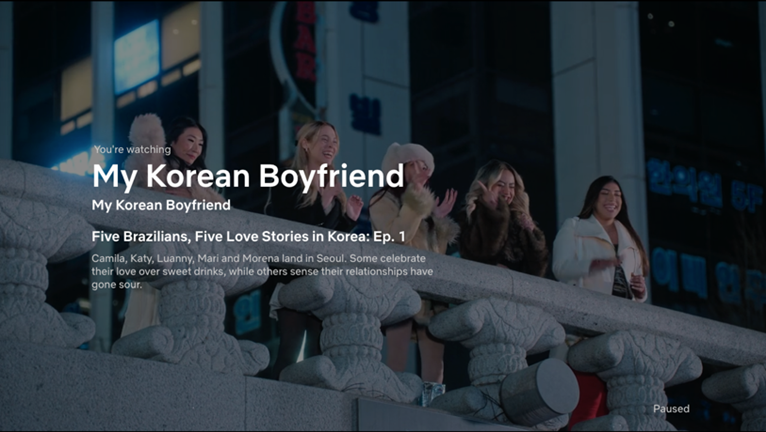
For this column, I focus specifically on the three Netflix shows released in the first quarter of 2026. The first released was a Brazilian reality dating show, My Korean Boyfriend, that featured the stories of five Brazilian women who travel to South Korea, four of whom purportedly had boyfriends in Seoul, to test whether their relationship can flourish in-person after maintaining only digitally facilitated relationships. The fifth woman is a Korean Brazilian, who is somewhat hostile to her homeland and its men, but finally warms up toward the end of her trip as she discovers her roots. The final episode concludes with the marriage of one of the women to a Korean man, who has immigrated to be with his new wife in Brazil. After the episodes conclude, it features groups of Brazilian media personalities who watch the shows and provide commentary that mostly positions Korean men and society as the object of their jokes, an exotic, unusual other. This includes the two East Asian Brazilian men commenters who largely legitimize the Brazilian commenters’ viewpoints and distance themselves from East Asian masculinity.
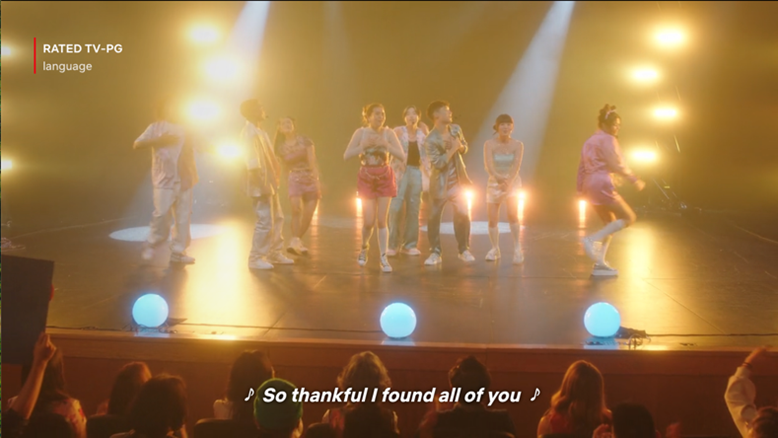
The second is a fictional mini-series, The Gangnam Project, a 2024 Canadian Broadcasting Company (CBC) Gem program that was redistributed on Netflix.2 Because of its all-digital release and short run-times, the show can be understood within the format of a web series with a story that leans heavily into common fanfiction narratives of the fan going to Korea, befriending idols, and becoming a star. The show features the story of a Korean Canadian mixed race (White-East Asian) teenager who is recruited to be an English tutor for a K-pop “trainee,” but because of the lead’s undeniable talent, she (and her brother) becomes a K-pop idol, instead, succeeding by absorbing and subverting industry norms. The easy solutions fit within the genre of a teen drama, but the problems she overcomes are primarily based in reductive criticisms of K-pop, such as OME Entertainment Company’s “number one rule” of no dating. As she grows in self-confidence, she is barely required to adapt to the new society, instead finding her own self-confidence and purpose while transforming Korean peers around her. As such, it is a Canadian fantasy of the K-pop industry with little verisimilitude or complexity.
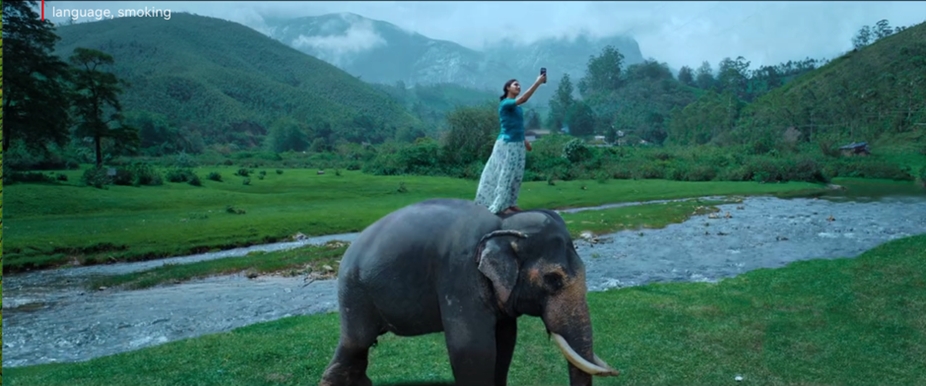
At the time of writing, the most recent release was the Indian (Tamil)-Korean co-production, Made in Korea (this should not be confused with the Apple+-distributed dramatic series of the same title, which was also released this year). The film features the story of a Tamil girl who first becomes interested in Korea when, as a child, she plays the role of a real-life historical princess who marries and settles into Korean royalty, thereby foreshadowing her own journey. Growing up as a Korean television and music fan, Shenba (Priyanka Arulmohan) dreams of visiting Korea but is rooted in her rural hometown until she is tricked by her newlywed husband, who is deeply in debt and sends her to Korea after he has taken her father’s money. She lands in Korea alone, but she quickly forms friendships with peers and an elder woman. Navigating the potential dream-turned-nightmare, she becomes the source of hope and social liberation for her Korean social group. Although her fan interests are the catalyst to go to Korea, it has almost no bearing or purpose once she lands.
For the rest of this column, I argue that the aforementioned Netflix-distributed texts discipline fandom into normative boundaries in which women fans’ journeys lead to receding fan interests and a centering of self in stories of self-discovery. It reverses the hierarchical relationship between the fan and the elevated fan object. Although this can be understood as a form of feminist empowerment, it comes at the expense of Koreans, a feminist fan fantasy that is tied to Orientalist relations of power. The shows do this through the representation of the idealized Korean partner, who puts aside his own comfort and family to center his partner’s life (while those who do not meet the romantic, social, or sexual desires of his partner are mocked or positioned as undesirable); the fan who shows idol trainees how to be more caring and emotionally honest while becoming an idol herself, who is literally centered in her group, an important distinction in K-pop; and the woman whose fannish obsession transforms into a headstrong independence and assertion of cultural authenticity, which are a beacon of light that frees her peers from the constraints of the psychosocial strictures into which they had been socialized. In this way, Korea, Korean popular culture, and Korean men all become useful objects for the women leads to understand what she really wants or needs to be fulfilled, which is never stronger fan commitments nor more excessive fan desire but a diminished interest in fandom and in Korea. I begin with the gendering of the heterosexual woman fan and conclude with the objectification of Korea, its culture, and its men as vehicles through which a more confident self-identity is found.
The Heterosexual Woman Fan of Color and Self-Discovery
Although Korean popular culture fans are disproportionately women3, the shows’ exclusive use of heterosexual women fans genders Korean popular culture while also evincing the possibility of heterosexual men fans and eliding queer fans. Considering previous narratives of women fans’ Korean journeys toward self-discovery, it has become a narrative trope that has the ideological function of trivializing Korean popular media as unserious and lowbrow. Indeed, a common insult, at least in the U.S., is to trivialize Korean popular culture interest by referring to Korean television as “soap operas” and K-pop fans as “tween girls.” Rendering Korean popular culture as feminine is a way of trivializing it and, in some cases, mocking it, disciplining interests away from the foreign popular culture and back toward the hegemonic center.
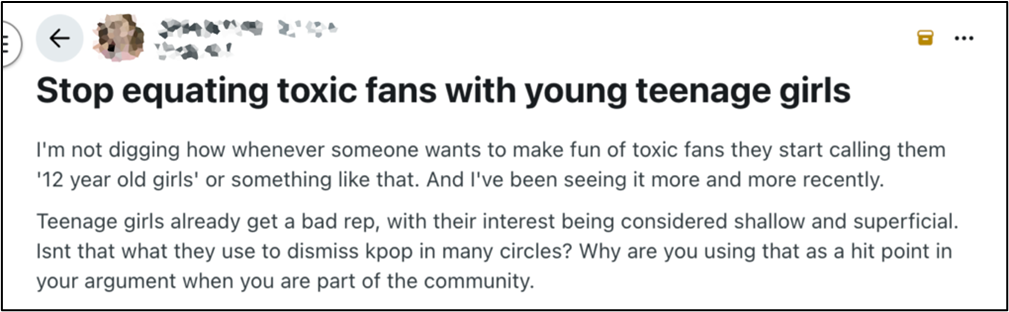
Of the three Netflix shows, which aired in 2026, the texts together point to the construction of the overly invested fan as delusional to her own detriment and, conversely, to the fan whose fan interests become incidental or even converted into the fan object herself, who become the most sympathetic. My Korean Boyfriend has largely been a footnote in fan conversations, but of the online comments about the show, they tend to mock the women for their “fetishistic” fan interest in Korean men. Indeed, the women are quoted as saying that they feel like stars in their own “K-drama,” positioning them as not only having overseas boyfriends but specifically Korean boyfriends. Although the women’s actual dates only occasionally reference fan interests, the show is largely read as romance tourism. In some cases, heterosexual women fans travel to South Korea to date and become romantically involved, believing in a fantasy relationship, oftentimes motivated by dissatisfaction with patriarchy and men in their home countries.4
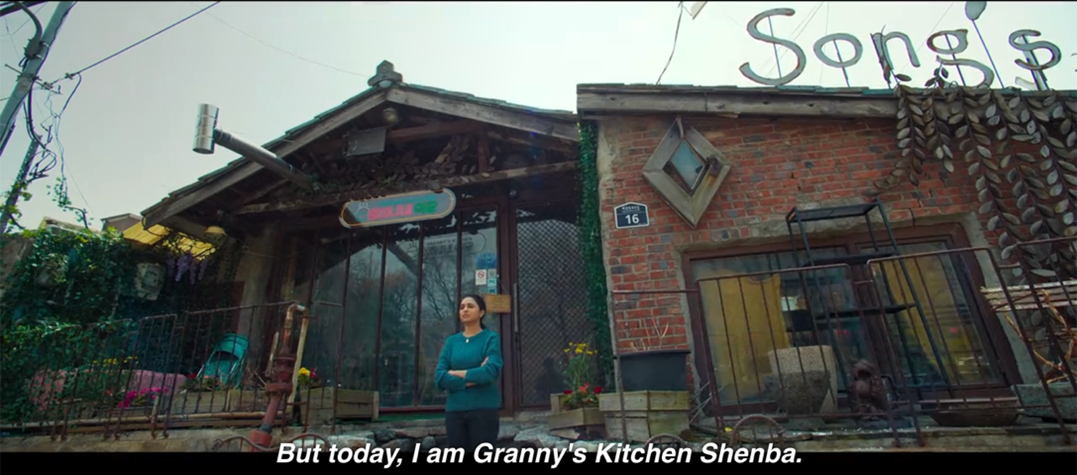
Women who are constructed more sympathetically are those who hardly desire Korean popular culture, men, or fandom but, rather, thrive and overcome in Korean society. They are admired because they no longer act like fans but as outsiders, who are successful by being true to themselves. Made in Korea and The Gangnam Project both represent the heroine as someone whose culturally authentic selves are not obstacles to life in Korea but produce positive change. In Made In Korea, the film begins by chronicling Shenba’s fan interests in Korea, but when she lands, distraught by her newlywed husband’s betrayal, she cannot enjoy being in her once-fantasy world. Instead, she is struck by the precarity of being a foreigner without the social support or the means to economically survive. With some early help from Jun-Jae (Baek Si-Hun), she finds a job taking care of an infirmed elder woman (Park Hye-Jin). After learning that the woman is faking her illness in order to escape the confining expectations of her son, who insists that she takes cares of his children, Shenba helps the woman rekindle her own independence and self-identity, starting a restaurant together, which Shenba inherits at the end of the movie. Shenba is uniquely able to empower Korean people around her to successfully pursue their musical dreams, to become a popular YouTuber, and to find independence from her obligations as a grandmother. In the end, she succeeds in Korea not by adapting (nor even learning the language) but simply by being herself.
In The Gangnam Project, Hannah (Julia Kim Caldwell) begins as a wide-eyed K-pop fan when she first enters OME, an entertainment company, as an English tutor. However, this soon changes as she becomes a co-equal as a trainee. To succeed, she has to gain self-confidence as not only a talented vocalist but also a dancer and songwriter. Her self-confidence would not be possible, however, while looking up to trainees, who already have fans before their debuts. Hannah, however, not only is an equal, but she becomes the leader of the group of trainees, freeing them from the strictures of K-pop’s industrial practices. For instance, Hannah encourages Chan-Mi (Brianna Kim) to share her feelings with Supreme (Joshua Hyunho Lee), which leads to a kiss and the violation of OME Entertainment’s rule against dating. After their suspension, Hannah convinces OME CEO Ken Yoon (Sean Baek) to allow Chan-Mi and Supreme to return because of the commercial value of a “star-crossed lovers” marketing campaign. This solves the crisis for the groups that have lost their respective leaders and ultimately allows Chan-Mi and Supreme to have both their careers and their budding romance.
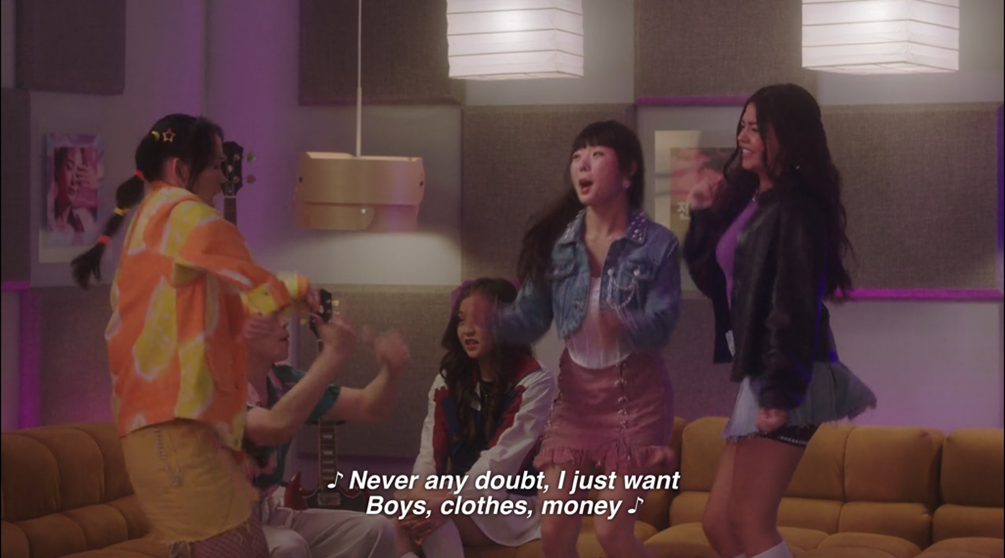
Hannah also recoils when her group receives their debut song, “Boys, Clothes, Money,” a superficial track about materialism and boys’ attention. Although the show points to her learning a lesson about the value of fun, bubblegum pop, the group is ultimately unable to perform “Boys, Clothes, Money,” when Mina (Kylie Haasz), a trainee in the group who had defected to be a soloist, steals the song. This crisis is solved when the trainees turn to Hannah, who orchestrates the members’ talents into a near-impromptu creation of a new track and dance routine as well as a co-ed group that subverts typical single-gender group formations (notably, there are already real-life co-ed groups such as KARD, Koyote, and All Day Project). Their performance, which synthesizes songs written by Auzzy (Paul Seungbin Lee) and Hannah, receives the most audience votes, demonstrating that authenticity is popular. Their performance also foils the sponsor company, Stardust Mobile, and its plan to rig the vote in favor of a boy band. As such, Hannah not only has cast off her fannish excitement but by being true to herself, she subverts and reinvents the K-pop industry itself to more closely resemble a Canadian/Western self.
Despite the shows’ different national origins, Brazil, Canada, and India, they all share the same narrative trope – the heterosexual woman fan who journeys to South Korea to discover herself, which can be understood as an Orientalist trope.56 She is not transformed by Korea, her character growth is apart from, rather than through, her fandom, and Korea becomes the objectified playground through which she gains self-confidence or learns that the kind of romance she wants is one in which the Korean man exists to satisfy her romantic dreams. The shows do not disparage fans overtly because of commercial motivations to attract fans as a built-in audience for the shows, but it displaces fandom and centers the woman protagonist to a fantasy Korea that exists for her dreams to come true. It implicitly argues that while fandom is appropriate as a starting point, the destination requires casting it aside.
Image Credits:
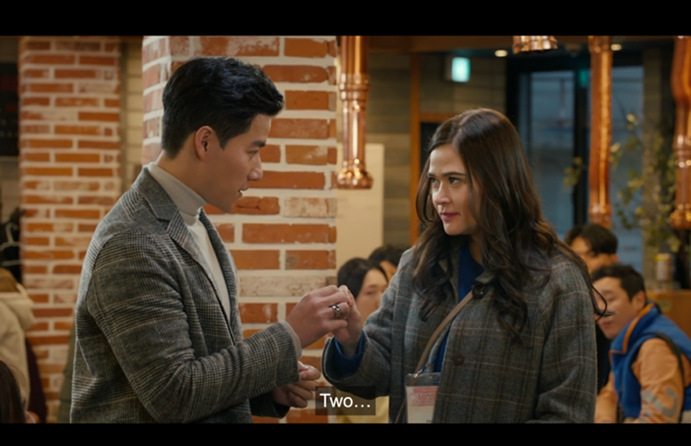
- Author screenshot of Ultimate Oppa from Amazon Prime Video
- Author screenshot from My Korean Boyfriend on Netflix, episode 1
- Author screenshot from The Gangnam Project on Netflix, episode 10
- Author screenshot from Made in Korea on Netflix
- Author screenshot of a sub-Reddit thread, which pushes back against demeaning K-pop fans as teenaged girls
- Author screenshot from Made in Korea on Netflix
- Author screenshot from The Gangnam Project on Netflix, episode 6
- David C. Oh, “Dialectics of Cinematic Co-Production: Ambivalent Korean Fantasy Romance in Ultimate Oppa.” Critical Studies in Media Communication 41 (2024): 437-449. ↩︎
- “What is CBC Gem?: CBC Gem General Information.” CBC. https://cbchelp.cbc.ca/hc/en-ca/articles/360013585533-What-is-CBC-Gem-CBC-Gem-General-Information. ↩︎
- Youna Kim, “Media in Asia: Global, Digital, Gendered, Mobile Asia,” in Media in Asia: Digital, Gendered, and Mobile, ed. Youna Kim (Routledge, 2022). ↩︎
- Min Joo Lee, Finding Mr. Perfect: K-Drama, Pop Culture, Romance, and Race (Rutgers University Press, 2025. ↩︎
- Michael Blouin, “A Western wake: Difference and doubt in Christopher Nolan’s Inception.” Extrapolation 52(2011): 318-337. ↩︎
- David C. Oh & Anna Wong Lowe, “Spectacles in hybrid Japan:: Deconstruction, semiotic excess, and obtuse meanings in Lost in Translation 10(2016): 153-167. ↩︎
I found this analysis particularly interesting because it goes beyond the usual discussion of the global popularity of Korean media. In my opinion, these stories are less about romance itself and more about how fandom becomes a pathway for exploring identity, culture, and belonging.
Accessing driving directions before departure can significantly improve trip planning. Users gain a clearer understanding of travel routes, estimated durations, and potential alternatives, helping them prepare for successful journeys.
This was a fascinating read. I really enjoyed how the article connected cultural context with broader media perspectives. It gave me a few new things to think about, and I appreciate the thoughtful analysis. Thanks for sharing!
What I find interesting is how fictional portrayals often inspire people to experience a country for themselves. If someone decides to visit South Korea because of their interest in K-dramas or K-pop, it can be rewarding to explore beyond the popular image and discover the country’s real attractions and local experiences. That balance between expectations and reality is often what makes international travel so memorable.
The idea that these stories often begin with a strong fascination with Korean popular culture but gradually shift the focus toward personal identity raises an important question about how international media represents both fans and the cultures they admire.
Este artículo ofrece información bastante útil para quienes suelen consultar resultados de diferentes sorteos. Me gusta que el contenido sea claro y no utilice explicaciones demasiado complicadas. Loterias mundiales puede ser una opción interesante para encontrar información relacionada con distintos países y revisar los datos de manera más organizada.
Easy to use, clean design, and really helpful for futbol libre tv.su fans. Keep up the good work!
Basketball random is a fun game to relax and challenge your basketball skills!