AI Prompt Generation and Anti-Blackness: On the Creative Assets of Suppressing Dissent
Diana Flores RuÃz / University of Washington, Seattle
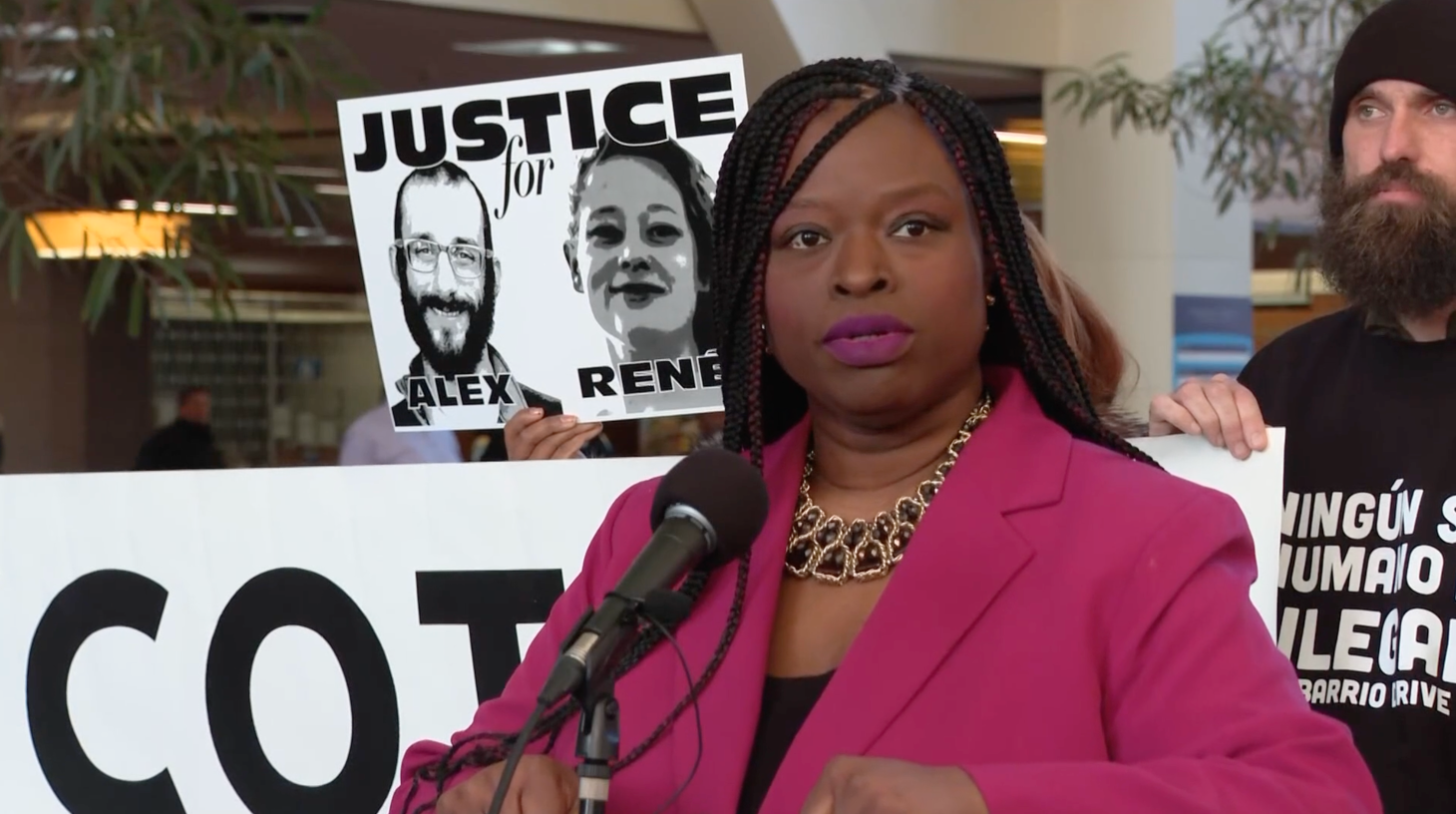
In the midst of wide-ranging forms of public dissent against the lethal violence of immigration enforcement, Nekima Levy Armstrong, a civil rights attorney, minister, and seasoned activist led a protest that peacefully entered a St. Paul, Minnesota church on January 18, 2026. In the church, where one of the pastors also serves as acting director of a local ICE field office, the group chanted phrases such as “ICE out” and “Justice for Renée Good.” Protesters and journalists alike were eventually arrested on conspiracy charges for interference with religious rights. When federal agents detained Levy Armstrong “shackled as if [she] was a slave” in five-point chains, both the agents and her husband filmed the arrest. Keenly aware of the misogynoir optics of her arrest as “a trophy for MAGA,” Levy Armstrong asked why her arrest was being recorded. One agent assured her the video would not go on social media and that it was to her benefit, saying “We don’t want to create a false narrative.” A few hours later, an AI-altered image released by the White House would attempt to override her dignified composure and visually simulate a false narrative about her arrest.
My previous Flow essay sought to analytically bridge the cultural production and transmission cultures of AI images emergent with the opening of Alligator Alcatraz. As a companion piece exploring how AI impacts the visuality of contemporary immigration enforcement, this essay elaborates on how anti-Blackness anchors that bridge. While historical racial geographies shape distinct visual cultures of forced im/mobility in the name of immigration enforcement, anti-Blackness remains a profound expressive mode of state power to both ensnare targets and suppress dissent. In the recent aftermath of Operation Metro Surge, the White House’s dramatically AI-altered image of Nekima Levy Armstrong offers an emblematic example of the enduring anti-Blackness foundational to the visual lexicon of immigrant enforcement. It also provides a literal snapshot indicating political priorities and quick-turnaround consensus for mass appeal. With the limitless possibilities of text-to-image generation, what can be gleaned from reverse engineering the AI image’s iconographic shorthand? By pausing to consider the anti-Black sociotechnical scripts embedded in the defamatory AI image, this essay meditates on AI prompt generation as a discursive site of power.
The political conditions surrounding the AI image requires discussing Operation Metro Surge, albeit briefly, in terms of the racial politics informing its mainstream mediation. Spanning from December 2025 to February 2026, the Department of Homeland Security touted Operation Metro Surge as the agency’s largest immigration enforcement operation to date. The anti-Blackness of its design was spurred by growing outrage over claims of widespread Somali fraud, conspiracies of which flourished in the wake of federal pandemic relief funding theft by the Minnesota nonprofit Feeding Our Future. Aimee Bock, the organization’s “ringleader” is white, yet the Somali majority of defendants in the case drew President Trump’s xenophobic ire: “I don’t want them in our country.” Even though most of Minnesota’s Somali community are US citizens, ICE arrests escalated. To be sure, the plurality of racial discrimination motivating state-wide arrests is not at odds with the anti-Blackness at the heart of the operation; anti-Blackness drives the tip of the spear that structures the violence of policing throughout communities of color. This is a point well understood from George Floyd Square and the robust mutual aid networks across the Twin Cities.
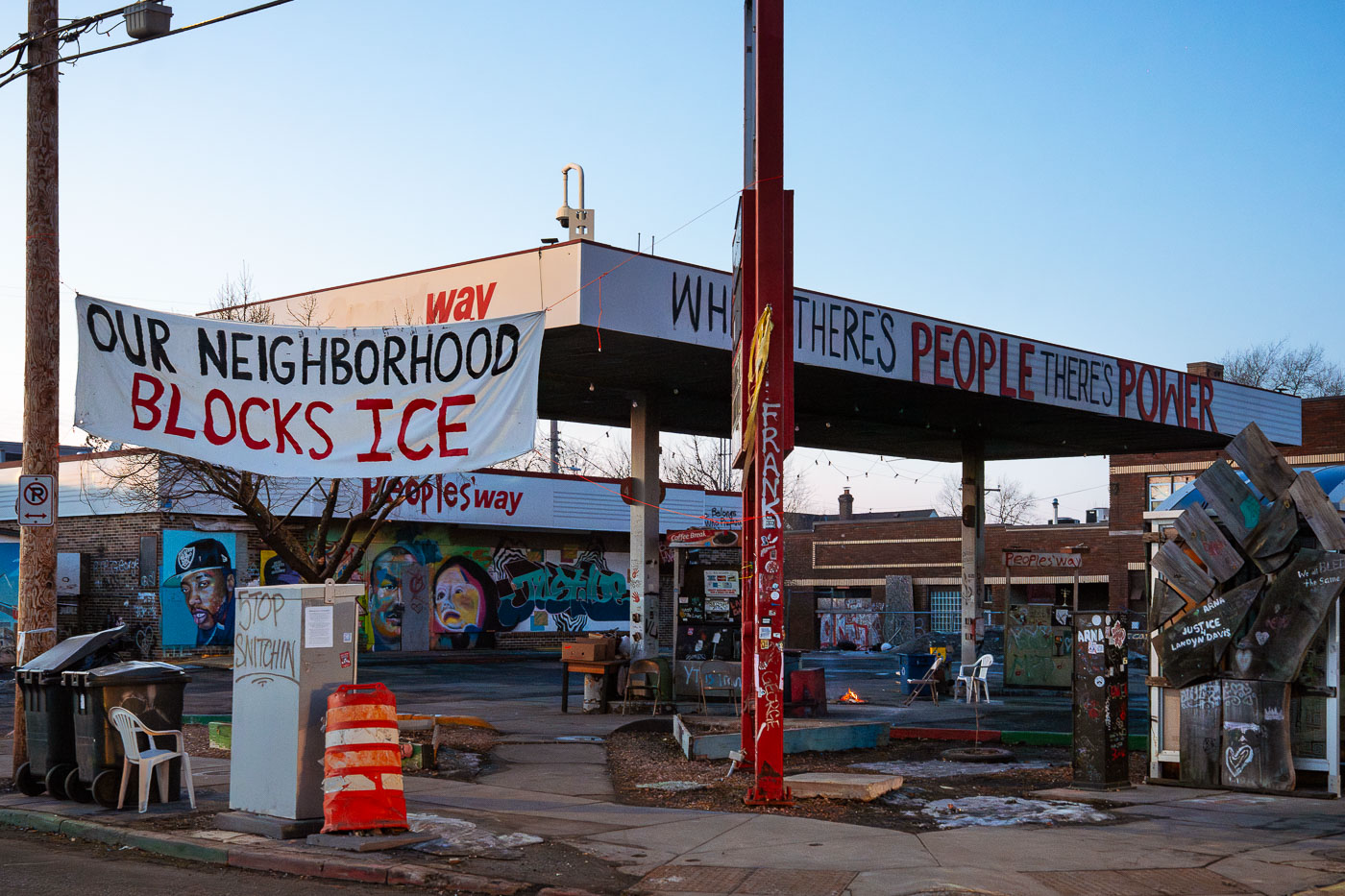
It is impossible to describe Operation Metro Surge without discussion of federal agents’ point-blank killings of Renée Good and Alex Pretti. The instantaneous re-rendering of their bystander-filmed actions””from peacefully asserting their First Amendment rights in public spaces to supposedly committing domestic terrorism””firmly centered the significance of visible evidence in media coverage of the operation. That Good and Pretti’s whiteness and American citizenship did not protect them seemed to signal a new threshold of retribution for opposing the violent tactics of ICE.
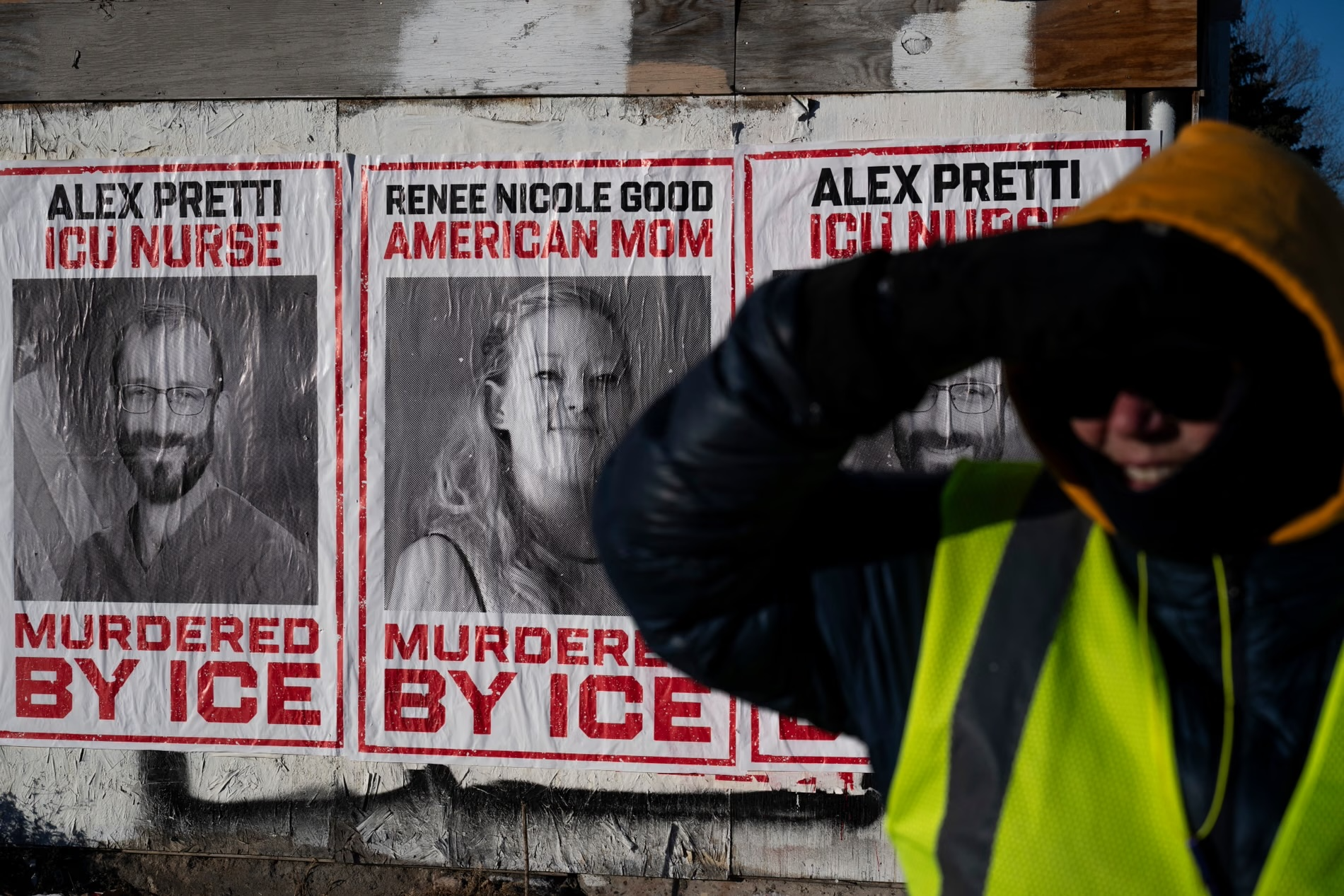
Following Mariame Kaba and Ruth Wilson Gilmore’s work on social structures of idealized victimhood and innocence, Robin D.G. Kelley notes how Good’s status defied the historical and social expectations of who is targeted “when armed agents of the state put you in a body bag.” As official White House social media relayed the administration’s perspective on mass opposition to Operation Metro Surge, it is little surprise that a Black woman’s physical and symbolic bondage sought to control social uprising. The shock-waves of Good’s murder further challenged immigration enforcement writ large, thus the AI image mobilized anti-Blackness to restore the sense of warranted militarized action and righteous law and order. In terms of both public relations strategy and digital image production, Nekima Levy Armstrong’s distorted image was an important creative asset.
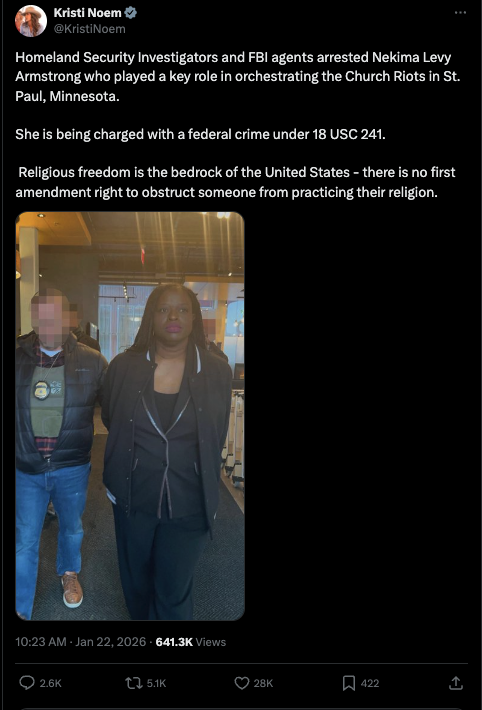
As she sat in a jail cell, federal officials circulated two very different images of her arrest. Kristi Noem, the former Secretary of the Department of Homeland Security, shared a still from the arrest video, which shows Levy Armstrong in a medium shot with her arms behind her back, a step ahead of an agent sporting a bulletproof vest with his face visually redacted. Her straight posture, unflappable facial expression, and pink lipstick convey a strong sense of self-possession as she gazes away from the camera lens. A few hours later, the White House posted an AI-altered version of the photo Noem shared. The stark differences between the original and the AI image are undetectable for most viewers without their side-by-side juxtaposition. Notwithstanding the community note added to reflect the use of AI, its original nondisclosure was an indication of a new era of AI-enabled propaganda and political dissent suppression.
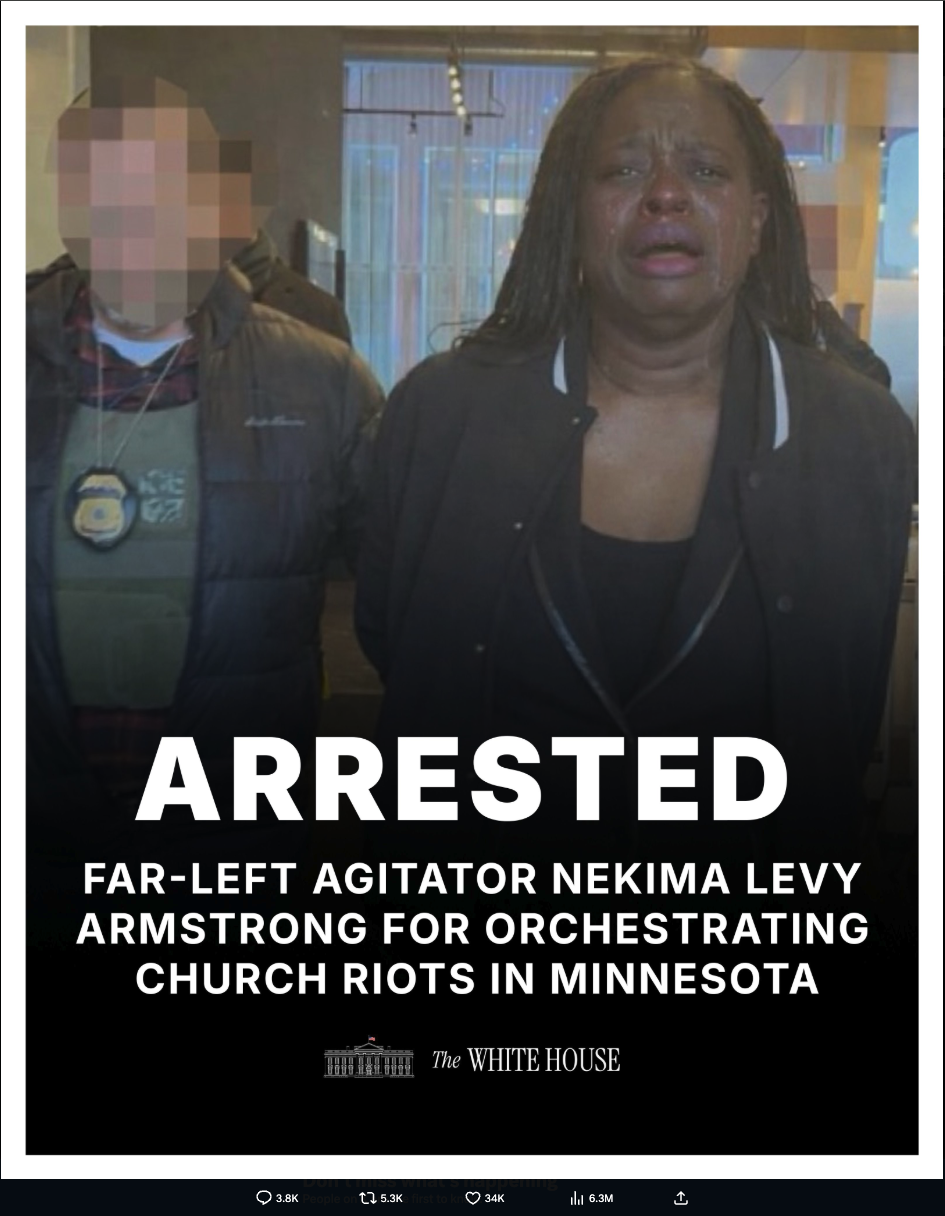
The image had been cropped to the effect of closing the distance between her ahead of the agent and now included large white text calling her a “far-left agitator” of “church riots” as well as official White House insignia on the bottom edge. The new face superimposed onto her body was stretched out and darkened, contorted into a tear-streaked, open-mouthed look of anguish. Her hair was tousled and her formerly placid gaze was molded into a furrowed, panicked look directly to the viewer. The AI image vertically compressed her head and torso, widening her proportions which made her appear shorter than the agent behind her and in a more vulnerable position to the camera-wielding agent. The pink of her lipstick was digitally wiped, replaced by a redness in her now-flared nose and cheeks that attempted to convey a durational sense of her distress and insinuated a combative nature of her arrest.
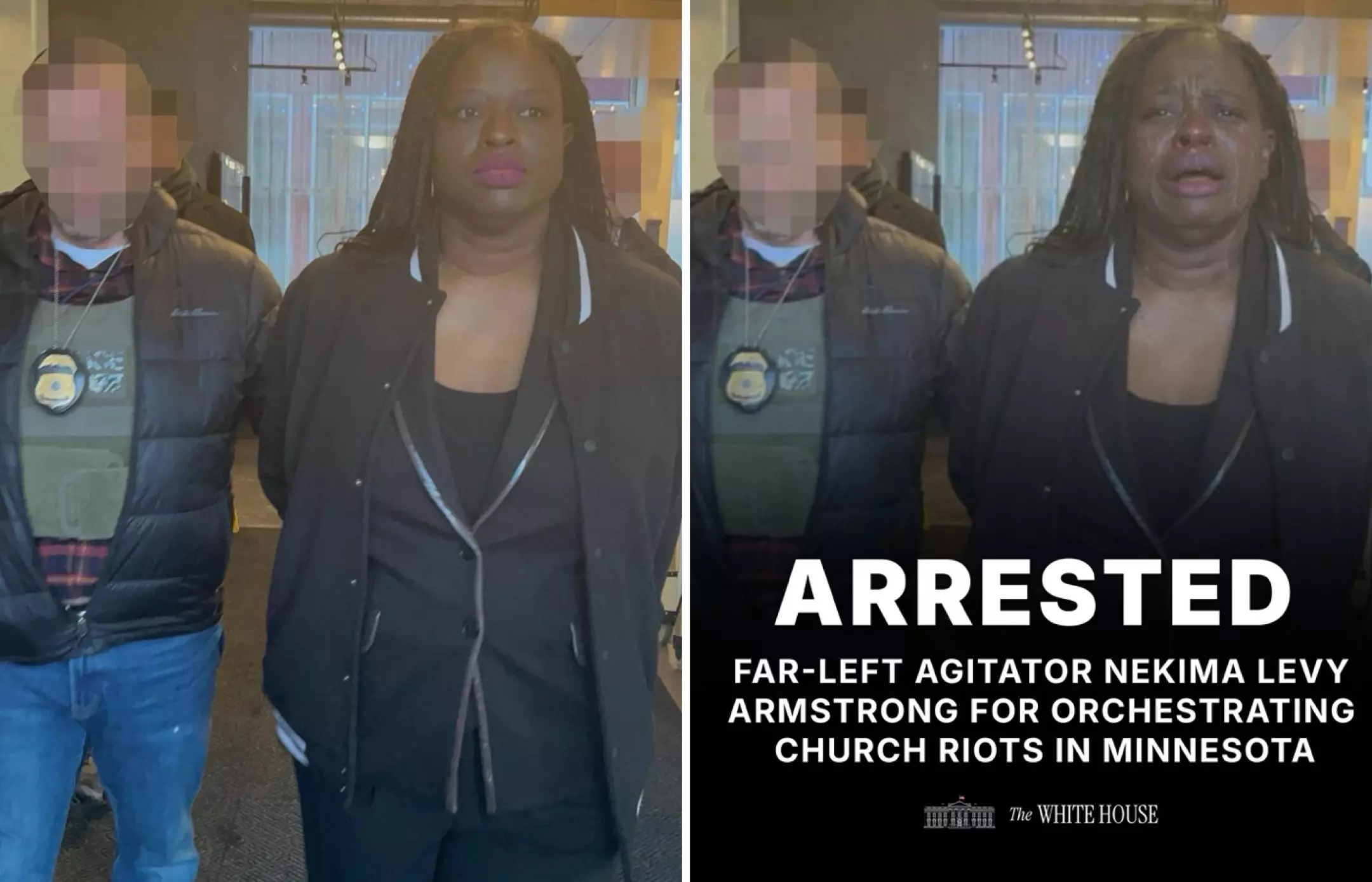
I invite readers to think with me: what text-to-image prompt terms did White House social media staff deploy to achieve these changes? Working backwards from thick description, what key words may have yielded their desired results? Which adjectives or adverbs proved commensurate for their visual goals? Although The Intercept found Google AI watermarks in the photo, it is unknown what exact tools and techniques were used. Did they engender her new appearance through conversational AI editing? Did they use image-to-image editing with additional visual source material? What historical anti-Black iconographies informed their choices? Asking these questions employs a feminist historiographic mode of speculation into the absent, yet fundamentally anti-Black text-to-image terms used to create Levy Armstrong’s falsified AI image. The word bank and visual references produced through speculation offer a sense of which anti-Black tactics are deemed most politically effective at this moment. Questioning the black-box of exact terms and methods used in the AI image’s creation yields insights into the affective economy of political suppression. As such, this critical speculation underscores the importance of understanding anti-Blackness brandished in technologically new and culturally enduring ways.
For Levy Armstrong, the “grotesque” racist caricature of her AI depiction was a textbook example of Jim Crow propaganda. In response to broader outrage over the government’s anti-Black image manipulation, the White House Deputy Communications Director un-apologetically proclaimed, “Enforcement of the law will continue. The memes will continue.” Recognizing anti-Black representational continuity is an important step in elucidating the political function of images. A further analytic step draws scrutiny into the socio-technical processes of rendering anti-Blackness: how are imagined communities ideally galvanized by inscriptions of racial terror? There is much to be gained from answering this question through scholarship of an earlier mode of anti-Black mediation: 18th and 19th century newspaper advertisements seeking self-liberated people on the run from enslavement.
For nearly a century, historical scholarship on these short text boxes have shaped understandings of slavery’s infrastructure and social paradigms, as well as mediations of agency and everyday life. In the decades since John Hope Franklin and Loren Schweininger’s breakthrough study of “runaway notices,”[i] digital humanities databases such as Freedom on the Move have expanded the study of key terms, metadata, and affect in these short texts across print networks. For instance, Kyle Ainsworth’s study of the Texas Runaway Slave Project underscores that writing these ads “had to be emotional because the act of running away challenged a slave owner’s control.”[ii]Sharon Block’s attunement to the social construction of complexion in fugitive ads emphasizes the social function attributed to slaveholders’ visual descriptions, creating “the monolithically imagined categories of enslavable ”˜Negroes.’”[iii] For newspaper readers, Jean-Pierre Le Glaunec suggests the unintended affirmation of indefatigable opposition to enslavement: “Runaway notices often reminded the reader of past acts of slave resistance.”[iv]
To conclude, I offer a provocation around the anti-Black media historical continuity between the construction of Nekima Levy Armstrong’s AI image and the simple, yet powerful descriptors of enslaved fugitive ads. What are the functional resemblances between the speculative language used in Nekima Levy Armstrong’s AI prompt generation and the texts of enslaved runaway ads? How does the attempt to restrain movements and coerce public perception connect the AI and readerly processes of text-to-image generation? If the ads’ textual conjuring of capture and retribution were intentionally designed and forcefully backed, but never guaranteed, then the desired chilling effect of immigration enforcement opposition through racist AI images is not assured.
Image Credits:
- Feature Image Screenshot taken by author from 1/29/2026 press conference
- George Floyd Square: Chad Davis Photography
- Memorial Posters: Roberto Schmidt/AFP/Getty Images
- Screenshot from author of Kristi Noem’s post
- Screenshot from author of Official White House X post
- Side-by-side: LA Times
[i] Franklin, John Hope, and Loren Schweninger. Runaway Slaves: Rebels on the Plantation. New York: Oxford University Press, 1999.
[ii] Ainsworth, Kyle, “Advertising Maranda: Runaway Slaves in Texas, 1835-1865.” In Fugitive Slaves and Spaces of Freedom in North America, edited by Damian Alan Pargas. University Press of Florida, 2018.
[iii] Sharon Block, Colonial Complexions: Race and Bodies in Eighteenth-century America (Philadelphia: University of Pennsylvania Press, 2018), 70.
[iv] Jean-Pierre Le Glaunec, “’Writing’ the Runaways: Descriptions, Inscriptions and Narrations in the Runaway Slave ”˜Advertisements’ of Le Moniteur de la Louisiane, 1802-1814,” Cahiers Charles V 39 (2005): 205-236.