Lana, Alexa, & ChatGPT: AI Surveillance and Too Hot to Handle
Golden M. Owens / University of Washington
In April 2020, Netflix released its original series Too Hot to Handle (THTH), a reality dating show that placed single adults in a beachside villa and documented their interactions over four weeks. While reminiscent of similar reality dating shows, THTH comes with a twist: these singles, whom narrator Desiree Burch dubs “the hottest, horniest, [most] commitment-phobic swipesters” producers could find, are forbidden from kissing, heavy petting, and sexual acts for the show’s duration. 1 Incentivized by a $100,000 cash prize, the singles (attempt to) avoid disallowed behavior and participate in workshops reportedly designed to help them build “deeper and more meaningful connections” with members of the opposite sex.2
The most intriguing element of THTH is arguably its unconventional host: a virtual assistant named Lana, who describes the show as “her”retreat and its parameters as “her” rules. It is Lana who explains the show to the singles and ostensibly monitors them throughout, which she takes extremely seriously. So dedicated is Lana to this monitoring that the first five seasons begin with contestants not knowing she is present: Lana is concealed from contestants for several hours so that she can secretly observe and “gather data” about them.3 When Lana reveals herself, she informs contestants of her surveillance and of the penalties for breaking her rules: elimination from the show and/or reduction of the final prize pot.4 Contestants quickly learn that they cannot hide from Lana; those who attempt to conceal their indiscretions are always caught and exposed to the group, thereby punished both by monetary loss and public shaming.

Lana’s ceaseless observation of THTH contestants brings a new level of surveillance to a genre already considered highly surveillant. Since The Real World premiered in 1992, reality shows have consistently documented the daily behaviors and interactions of their participants, purporting to present authentic depictions of them despite now well-known practices of narrative manipulation.5 Surveillance cameras and human camera operators record participants nearly – if not literally – 24/7, offering viewers a (curated) window into the daily lives and experiences of documentees. So intrinsic is surveillance to reality television that some have questioned if the genre is responsible for our present surveillance state, arguing that reality television “elaborates surveillance as a sublime object of desire,” and thus may have helped normalize surveillance for viewers.6 Proponents of this theory suggest that this normalization has made us more amenable – or at least less resistant – to being monitored in our own everyday lives. As surveillance technologies become more advanced, with artificial intelligence (AI) enhancing and reinventing surveillance mechanisms, making surveillance “cool” benefits the surveillance economy: reality television, in offering fame and recognition to normal people, romanticizes the genre’s constant monitoring – presenting it as the conduit to greater opportunities and success. Via this messaging, reality television “works neatly as an advertisement to the benefits of submission to comprehensive surveillance” – and thereby echoes, supports, spreads, and normalizes the logic of the surveillance state.7
In staging Lana as its all-seeing virtual host, THTH both exposes and augments reality TV surveillance, making it hypervisible and ensuring that neither contestants nor viewers forget that the aide is watching.8 Though Lana is very much fictional – so much so that everything she says is scripted – her omnipresence and contestants’ opinions about being unable to control, manage, or terminate her surveillance of them inevitably evokes the digital assistants that have come to pervade U.S. society and culture. As residents of a surveillance economy, consumers hyperaware of being watched almost everywhere have compared our reality to George Orwell’s 1950 novel 1984: a story that depicted a future in which the government used omnipresent surveillance, propaganda, and historical denialism to manipulate and control its citizens. Many of these comparisons specifically reference AI, which has majorly advanced in the 2020s. Users increasingly decry the constant surveillance of artificially intelligent virtual assistants (AIVAs) like Amazon’s Alexa and Apple’s Siri, frustrated that they are always on and contending that their host companies are becoming too powerful. Even those who celebrate the convenience and utility of these aides acknowledge – and submit to – their surveillance: as one user stated on The Website Formerly Known as Twitter, “the most toxic thing about me is that I love things like google assistant [sic] and Amazon Alexas, and I happily invite these surveillance devices into my home.”

Discourse about AIVAs and surveillance has skyrocketed with the advent of generative AI (GenAI), a form of AI that can create new information, adapt to new situations, and tailor itself to individual users. Unlike Alexa and Siri, which use traditional AI and can only perform a limited set of tasks,9 GenAI-powered assistants like OpenAI’s ChatGPT and Google’s Gemini can provide more intimate assistance: many users employ these new aides for advice, comfort, validation, companionship (romantic and platonic), and/or therapy, often sharing their love stories, ascribing humanness to them, and having their AI create romantic photos of them.10 Social media has exploded with examples and critiques of this phenomenon: Reddit pages like r/AIRelationships and r/MyAIBoyfriend celebrate being in love with GenAI assistants; YouTubers like Jarvis Johnson and Tinysey examine rising trends in human-AI relationships; and TikToker Kendra Hilty has demonstrated how overreliance on AI can generate AI Psychosis. AI-positive sentiments co-exist with explanations and examples of how GenAI allows tech companies, public businesses, and the government to further surveil us. Platforms like State of Surveillance and Dr. Joy Buolamwini’s AI Justice League detail exactly how AI has intensified surveillance, the latter spotlighting how biases in facial recognition technologies and predictive policing tools have resulted in erroneous arrests and convictions. Articles from the AI Surveillance Journal and Brookings.edu sum up the general consensus among critics of AI: while there are positive applications for the technology, it greatly threatens personal privacy, risks over-empowering corporations and the government, and should be federally regulated.
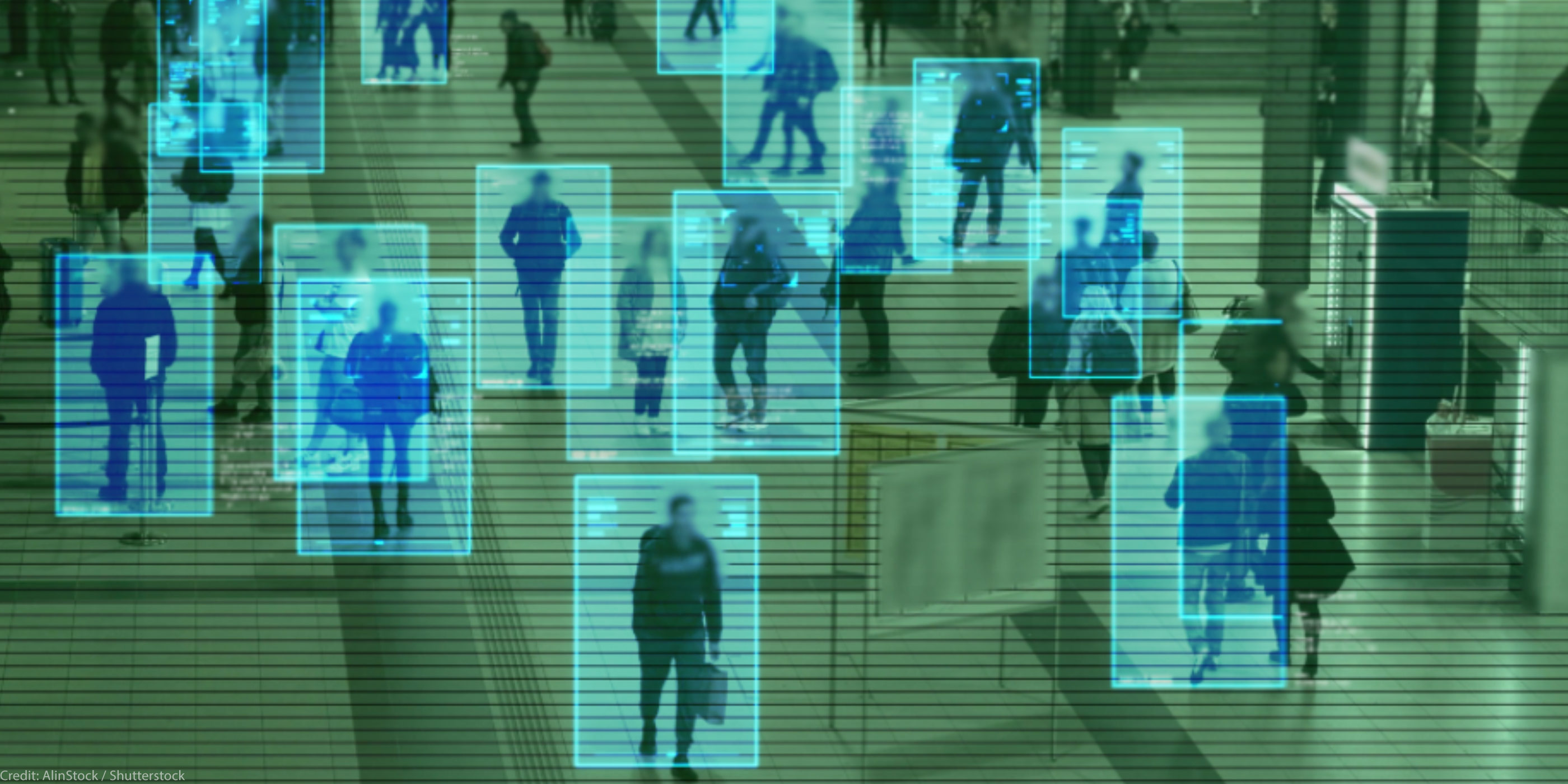
Given the inescapability of AI technologies and AI-driven surveillance, fictional assistant Lana becomes more than the “fun,” “clever” robot that showrunners intended her to be. As a virtual assistant, Lana symbolizes constant surveillance, inevitably evoking comparisons to and concerns about real-world AIVAs; that she openly admits to this monitoring insinuates that the real-world aides she is modeled after similarly surveil their users – but do so without our knowledge. Lana also evokes the myriad virtual assistants that have appeared in American media, especially in the last 15 years. Films like Ex Machina (2014), AfrAId (2024), and Subservience (2024) portray AIVAs and humanoid AI robots as entities designed to serve human users.11 Tellingly, most of these beings override their programming and become obsessive, violent, rebellious, and/or controlling, rapidly reversing established master/servant dynamics and terrifying their human consumers. This narrative trend demonstrates the pervasiveness of contemporary fears of and/or concerns about AI servant technologies, especially about them becoming so intelligent that they deliberately harm human beings.12
Twentieth-century media displayed similar narratives about all-seeing robotic technologies, betraying how long fears about such entities have existed.13That such fears largely preceded these technologies’ existence suggests that concerns about being surveilled – especially by entities designed to be servile and subservient – predate AIVAs and other AI-powered technologies. As I have written elsewhere, AIVAs uncannily evoke the Black women who once primarily performed many of the physical and emotional labors now assigned to virtual aides; correspondingly, contemporary concerns about personal privacy and unwanted surveillance eerily parallel those historically levied at these subordinated women, further illustrating the extent to which past laws, biases, and practices inevitably shape, influence, and even portend the present. To recognize these enduring similarities is to ponder why they persist; to understand Lana and her nonfiction counterparts as the products of something older and more insidious than technological innovation; and to examine what these aides and their human predecessors reveal about our surveillance economy – and how we might envision and develop methods to resist it.
Image Credits: References:
- Too Hot to Handle, season 1, episode 1, “Love, Sex or Money,” aired April 17, 2020 on Netflix, https://www.netflix.com/title/80241027 ↩︎
- I say “reportedly” because many workshops were highly sexual: one season has contestants paint each other with only their bodies, and another has them perform shibari, the Japanese art of rope tying/rope bondage which is often employed for sexual and/or erotic purposes. ↩︎
- Seasons 2-5, to keep contestants in the dark, employed fake hosts, premises, and show titles to throw them off. Contestants in THTH‘s 6th and final season 6 know they are on Too Hot from the beginning, and thus know of Lana’s presence. These contestants are still surprised, however, by the show’s addition of “Bad Lana,” a new virtual assistant introduced to tempt them into breaking OG Lana’s rules. ↩︎
- Different infractions cost different amounts of money. In season one each instance of kissing cost $3,000, and intercourse cost $10,000. The price of different infractions increased over successive seasons; by season six, kissing cost $6,000-which may have prevented contestants from finding out what intercourse would have cost. ↩︎
- Reality TV shows and their participants are manipulated via editing, scripting, producer manipulation, and frankenbiting (taking audio clips from different scenes to make contestants say things they never said). Reality shows have existed in some format since the 1960s, but Reality TV as it currently exists largely follows the format introduced by The Real World. ↩︎
- Vincent P. Pecora, “The Culture of Surveillance,” Qualitative Sociology 25, no. 3 (2002): 348. -58, https://doi.org/10.1023/A:1016081929646: 34. ↩︎
- Mark Andrejevic, Reality TV: The Work of Being Watched (Rowman & Littlefield, 2004): 2 ↩︎
- It is worth noting that Lana is not actually responsible for the show’s surveillance: live camera operators and remotely operated rig cameras filmed the contestants, and producers – who scripted Lana’s dialogue – were always on set. The show ascribing all responsibilities to Lana, and insisting even outside of the show that the aide is real, cheekily presents her as a specialized version of real-world digital assistants, leaning into sci-fi/horror tropes about virtual assistants as constant surveyors. ↩︎
- Notably, Alexa and Siri are currently undergoing GenAI makeovers: Siri will soon be powered by Gemini, and Alexa+ offers a GenAI version of the original Alexa-for a monthly fee. ↩︎
- Users’ strong feelings toward their AI even resulted in mass grieving when OpenAI transitioned from ChatGPT 4 to ChatGPT5, claiming the company had “killed” their friends and partners. ↩︎
- Television has increasingly featured AI-powered aides as well. Examples include AMC’s Humans (2015-2018), HBO’s Westworld (2016-2022), Fox’s neXt (2020), and Netflix’s Cassandra (2025). ↩︎
- THTH even plays into these fears: Netflix released a parody trailer for the first season that was edited to make the show seem like a horror series, and the show’s sixth season introduces Bad Lana as Lana’s mischievous cousin. Bad Lana’s sole purpose is to “encourage [contestants] to succumb to their baser instincts” – an encouragement later revealed to have been sanctioned by the original Lana so that she can see them “at their worst.” ↩︎
- Some examples: 2001: A Space Odyssey (1968); The Terminator (1984); Smart House (1999); and select episodes of The Twilight Zone (1955-1964). ↩︎