Window Dressing: Spectacular Costuming in MTV’s The City
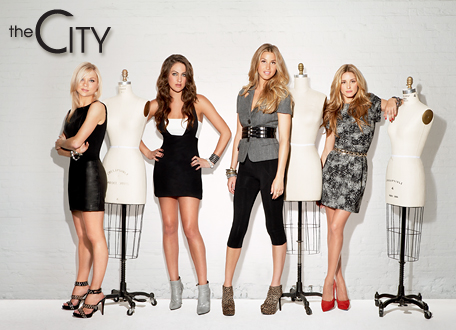
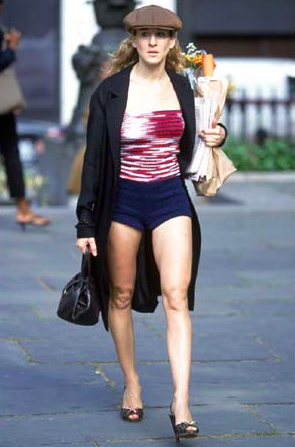
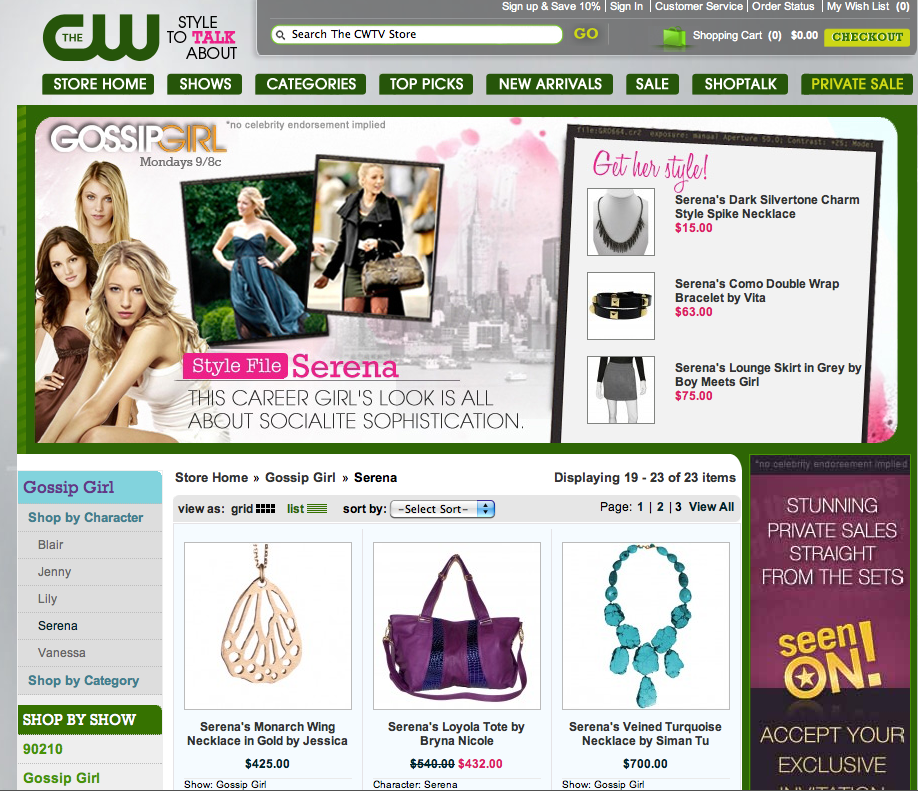
The conventional role of costuming in film and television is to “complement the narrative, characters and stars.” ((Bruzzi, Stella. Undressing Cinema: Clothing and Identity in the Movies. New York: Routledge, 1997. p. 3.)) On Sex and the City we know that Carrie (Sarah Jessica Parker) is whimsical because she pairs hot pants with a newsboy cap and Fendi mules and that Samantha (Kim Cattrall) is sexually adventurous because she prefers bold colors and low cut dresses. Costuming is designated as being “spectacular’” if it “interrupt(s) and destabilize(s) character and the unfolding action, offering an alternative and potentially contrapuntal discursive strategy””a vertical interjection into a horizontal and linear narrative.” ((Bruzzi, Stella and Pamela Church Gibson. “”˜Fashion is the Fifth Character’: Fashion, Costume and Character in Sex and the City.” Reading Sex and the City. Eds. Kim Akass and Janet McCabe. London: I.B. Tauris, 2004. p. 123.)) At these moments what characters are wearing becomes more important than what they are saying and doing. In such cases, costuming often takes on an extradiegetic role by encouraging fans to go out and purchase what they’ve seen characters wearing; Carrie Bradshaw’s shoe obsessions convinced many female viewers to procure their own pair of $630 Manolo Blahnik pumps while the clothing worn by Gossip Girl‘s young cast can be purchased directly through the CW website. ((Lauren Lipton. “Style & Substance: After ”˜Sex,’ Fashion World Looks for a New TV Showcase.” Wall Street Journal 17 Sep 2004. B1.)) Of course, this use of fictional characters as “living display windows” is nothing new; since the earliest days of moving pictures the screen has functioned as a department store window, whetting and motivating the viewer’s consumer desires. ((Eckert, Charles. “Carole Lombard in Macy’s Window.” Fabrications: Costume and the Female Body. Eds. Jane Gaines and Charlotte Herzog. New York: Routledge, 1990. p.103.))
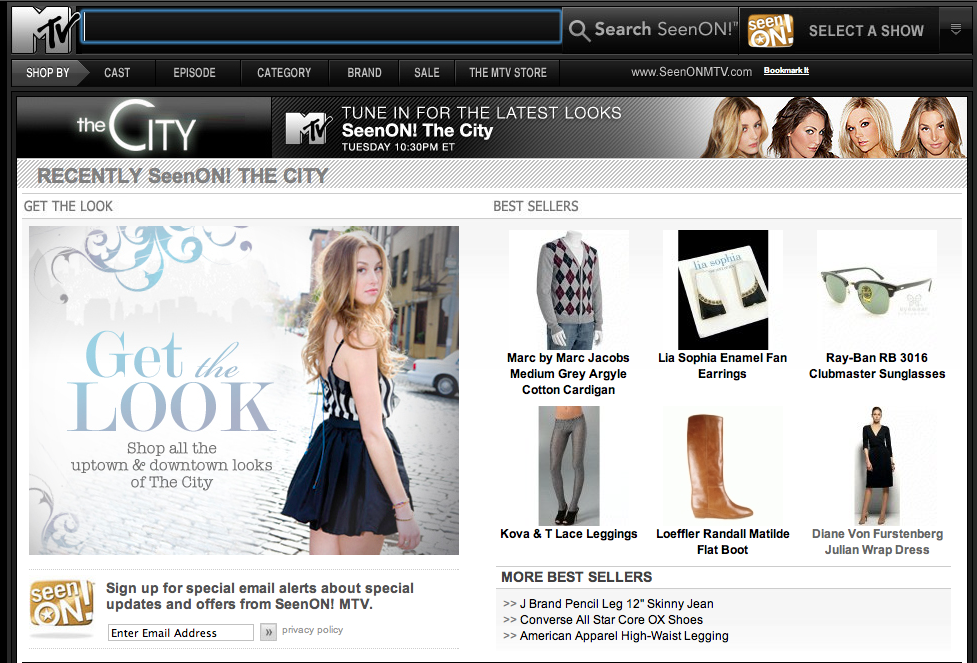
However, in the scripted reality series The City””which chronicles reality veteran Whitney Port’s move from the beaches of The Hills to New York City’s cutthroat fashion world””costume serves as the organizing sensibility, over and above narrative or character development. As with most scripted reality programs airing on MTV, very little “happens” on The City. Most conflicts between characters are scripted and major plot points are revealed via internet and tabloid reports weeks or months before an episode airs. For example, on September 9, 2009 The Hollywood Gossip revealed that Whitney and her boyfriend, Freddie Fackelmayer, had broken up, even though this relationship was not introduced into The City‘s narrative until a month later, in an October 20th episode (“Meet the Fackelmayers”). ((“Whitney Port and Freddie Fackelmayer Break Up.” The Hollywood Gossip. 9 Sept 2009. 27 Dec 2009.
Since the majority of The City is filmed in department stores, the offices of fashion magazines, photo shoots, industry parties, and behind the scenes of runway shows, there are ample opportunities to showcase images of clothing, shoes, handbags, and accessories. Furthermore, cast members frequently draw attention to each other’s fashion choices, commenting on specific details like the color of a shirt, the cut of a dress, and make up choices. In “It’s All Who You Know,” for instance, Whitney has lunch with Samantha, a buyer for Bergdorf Goodman, and compliments her application of blue eyeliner by exclaiming, “You’re so daring, I would never put that on!” Later in the episode Kelly Cutrone, Whitney’s boss and mentor, questions one of Whitney’s design sketches, “Assymetrical? I think it’s going out.” Another episode, filmed at Miami’s fashion week, confirms that “futuristic” looks are “in” for Spring 2010 (“Friends and Foe-Workers”). In all three cases drawing attention to costuming alerts The City‘s viewing audience (females ages 12-34) about what is in and what is out in contemporary fashion. ((Weprin, Alex. “Can MTV Get Its Groove Back?” Broadcasting and Cable. 23 Feb 2009. 27 Dec 2009.
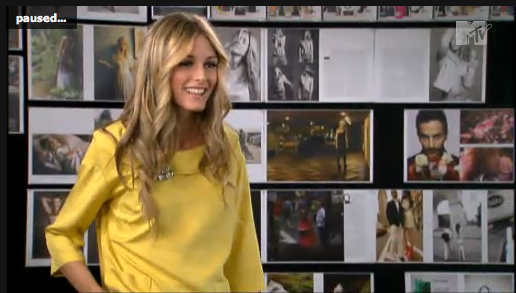
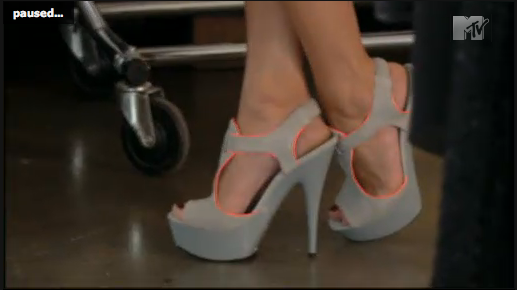
Occasionally The City‘s spectacularization of fashion does serve an explicit narrative purpose by moving the plot forward or developing character motivations. For example, one of the series’ major storylines involves socialite Olivia Palermo’s tenure at Elle magazine as Accessories Editor and her clashes with Erin Kaplan, Elle‘s Director of Public Relations. Erin believes Olivia is ill equipped to handle her new position, but Creative Director, Joe Zee, firmly believes that Olivia belongs at Elle (no doubt due to the free publicity generated by The City‘s ever present cameras). Joe cites “[her] taste, [her] eye, [her] passion for fashion” as key components of Olivia’s value to the magazine. In order to support these claims, Joe frequently draws attention to Olivia’s costuming. When Olivia dons a bright yellow tunic at a staff meeting, Joe remarks, “I love that color!” And in a later episode he notes Olivia’s high heels and the camera responds by cutting to a close up of Olivia’s feet. At these moments a focus on costuming serves a narrative purpose””as visual evidence of Olivia’s good taste.
More often than not, however, fashion in The City exists merely to be looked at and emulated. Rather than using establishing shots to locate characters in a specific geographical locale, episodes frequently open with establishing shots of high end clothing and jewelry stores (Bulgari, Louis Vuitton, Ralph Lauren) or of anonymous but trendy New Yorkers, while loving close ups of expensive clothing items occasionally even serve as transitions between scenes.
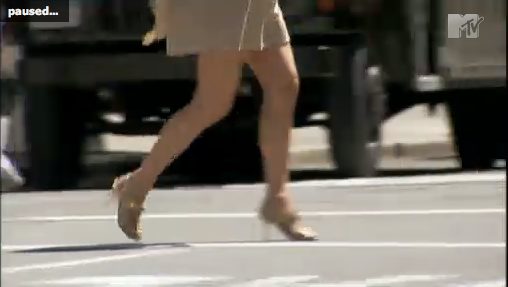
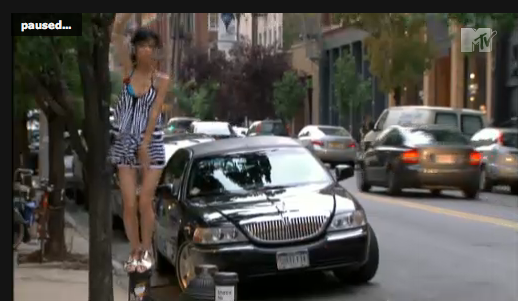
Rather than orienting the characters in space, such shots place them in a generalized “fashion world,” as if New York City itself was merely the colorful backdrop for an Elle fashion editorial. It is fitting, then, that the final shot of the season 1 spring finale, “I Lost Myself in Us,” in which Whitney breaks up with her on-again/off-again boyfriend, Jay Lyon, was of a pair of boots. In scripted reality programs like Laguna Beach and The Hills emotional climaxes are often punctuated with a close up on the heroine’s face, a device known as the “egg.” Traditionally employed by soap operas, eggs allow the savvy viewer to read layers of emotion into the seemingly blank look of the actor. ((Levine, Elana. “The New Soaps? Laguna Beach, The Hills, and the Gendered Politics of Reality ”˜Drama’.” FlowTV Vol. 4, No. 10 (18 Aug 2006)
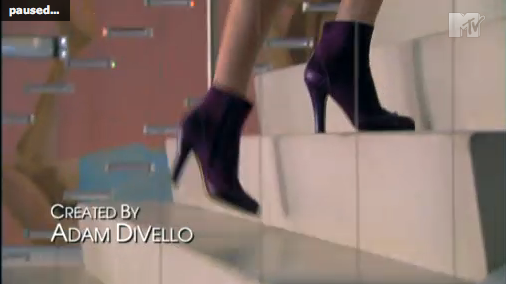
While the conspicuous display of contemporary fashion and the placement of the stylish female body in exciting locales are fundamental to the appeal of many programs featuring single and/or career-driven women living in urban environments (Sex and the City, Gossip Girl, Ally McBeal, Melrose Place, Lipstick Jungle), The City‘s use of spectacular costuming is employed to provide its audience with pleasures that exceed or defy the boundaries of its otherwise flimsy narrative. Indeed, because The City‘s narrative has been rendered superfluous through the proliferation of multi-platform content venues (tabloid weeklies, fashion blogs, internet gossip sites) that inform viewers of crucial plot details months or weeks ahead of an episode’s air date, viewers are instead offered a living, breathing fashion editorial.
Image Credits:
1. MTV’s The City
2. Carrie Bradshaw’s quirky style
3. Gossip Girl fans can purchase the looks they see after the show ends: screen capture from CW website: screen capture from the CW’s website
4. The City‘s viewers are encouraged to shop for looks identical to those featured on the show: screen capture from MTV’s website
5. Olivia’s costuming denotes her taste: screen capture from the streaming episodes on MTV.com
6. Olivia’s denotative pumps: screen capture from the streaming episodes on MTV.com
7. Shots of stylish New Yorkers serve as transitions between scenes: screen capture from the streaming episodes on MTV.com
8. Shots of stylish New Yorkers serve as transitions between scenes: screen capture from the streaming episodes on MTV.com
9. Whitney’s booties are more fascinating than her face: screen capture from the streaming episodes on MTV.com
Please feel free to comment.
Pingback: Window Dressing: Spectacular Costuming in MTV”™s THE CITY « judgmental observer
Great points, Amanda. One element of fashion’s role on The City that I think ties in to fashion as plot/character is the way that “alternative” styles are dealt with and eliminated. For instance, the entire first season had a recurring “plot” in which Whitney’s colorful California style was smacked down as inappropriate and unsophisticated (it came up again in her fashion line sketches). The evolution of Whitney’s fashion, then, substitutes for any personal or professional growth as she looks “more New York” and isn’t “fresh off the plane” anymore – her career hasn’t changed, her love life isn’t any better, she still has terrible television friends, but she can sure pick a minidress.
Thanks for the comments, Liz. You are totally right about Whitney’s style — she definitely stands out against characters like Olivia, Roxy and especially Kelly (who only seems to own black T-shirts and jeans).
Pingback: My Popular Culture New Year’s Resolutions « judgmental observer
Pingback: “THE HILLS, JERSEY SHORE, and the Aesthetics of Class” « judgmental observer