Anime has ALWAYS BEEN Political: The Multicultural Politics of Japanese Anime
Amelia Ann Barrera / University of Texas at Austin

Anime, like all art, is political. Statement. However, if you traverse any part of the internet related to anime, you will come across many videos trying to debunk this. The main argument being rooted in Orientalism that states since Japan is a conservative “less socially advanced” country it cannot make political or leftist media. However, that argument can be easily debunked by using 3 current anime productions that all depict diverse characters to defy the Japanese conservative government belief in a mono-cultural Japan.
The most famous manga/anime adaptation that depicts a diverse world of characters is Eiichiro Oda’s One Piece. Originally released in 1997, this manga has lasted for almost 30 years as a manga, 25 years as an anime, and 3 years as an English language live action series. One Piece is a worldwide sensation that works due to its racially diverse cast who are based on real world cultures.
In 2020, when Netflix announced both its adaptation and its cast for their live action adaptation of One Piece, discourse spread online about the diverse casting of its leads. Primarily, the casting of the main character, Monkey D. Luffy. The actor, Iñaki Godoy, is Mexican with mestizo features: brown skin, curly hair, and a thick accent. This set the internet into a frenzy. From fans who wanted an Asian lead to people who wanted the Oda accurate light-skin Brazilian boy. This discourse surrounding the diverse cast kept growing as more casting announcements came out through the next 2 seasons. Charithra Chandran’s Princess Vivi received heavy backlash since in the anime she is depicted as white and more middle eastern inspired, which is against Chandran’s dark-skin Tamil background. It is important to point out that through all this discourse that the original writer, Eiichiro Oda, has been integral to the casting process since the beginning. His word isn’t final, but it is loud. He talks about his audience as wanting to experience new worlds and cultures through his manga in a podcast with Iñaki Godoy and both agree that the inspirations of cast and crew are foundational to the message of One Piece (Netflix Podcast).
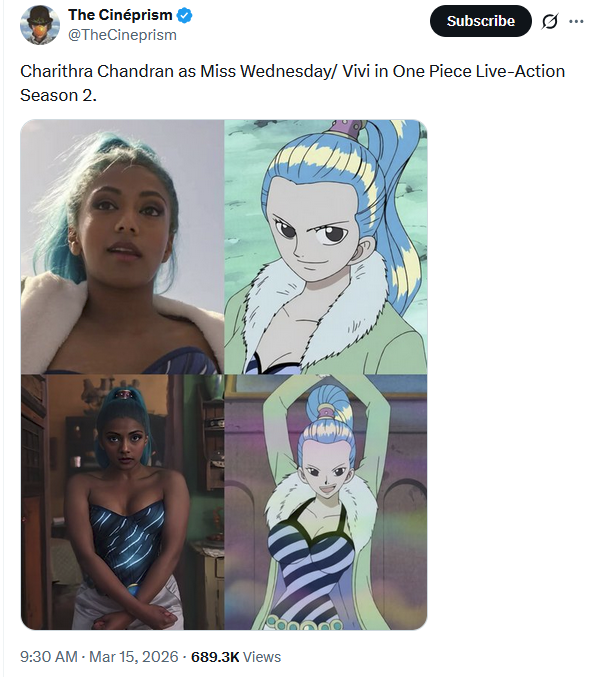
His conceptualization of a diverse world (as seen in the manga Q&A below) seems oppositional to the Japanese government and the mono-cultural mask that it puts on. Through its soft power strategies, need for foreign business, and the declining birth rate, Japan has used foreign influence to prove itself as a modern country to the West. Japan is becoming more diverse as the years pass, but the government seems to want to keep that a secret with its massive appeals for immigration reforms. However, the work of Eiichiro Oda and his contemporaries show a different point of view. A view of multicultural Japan through fantasy fiction.
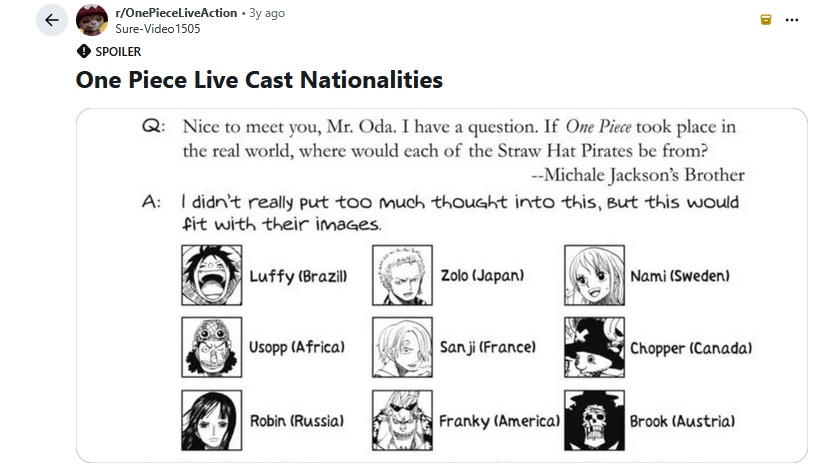
The world of Eiichiro Oda blends the pirate life of the Caribbean with the individual cultures of Japan, Peru, Venice, New York, Spain, and many others to create the world of One Piece. This diversity is intentional to show how the authoritarian regime of the World Government uses its influence to harm different islands and their cultures. His characters are also based on real life revolutionaries, queer icons, and dictators. He pulls from all over human history to build out the world of the manga which makes it a richer story. One Piece is based in multiculturalism to depict the range of the human experience and the power that the common man has.
Speaking on the power of the common man, Kamome Shirahama’s bestselling manga and recently turned hit anime, Witch Hat Atelier builds out another fantasy world with diverse faces, genders, bodies, and even ability to integrate her messaging on the importance of diverse thought.
Witch Hat Atelier follows a regular young girl, Coco, who lives in a world where the only people who have access to magic are witches who are seemingly born with it. Coco learns the secret to magic and is taken to live as an apprentice in the titular atelier. The audience learns rather quickly why magic has been gate-kept by a certain group of witches for good reason. However, the use of the word “outsider” makes Coco’s use of magic scandalous. She often uses magic differently due to her status. Coco’s experience at the atelier brings up questions and messaging about the importance of diverse thought in higher ranked institutions.
The show also displays this messaging through its diverse characters in sexuality, race, age, and even ability. There is the character of Tartah, a witch apprentice, who has a color blind-like disability which makes it almost impossible him to use magic. However, through Coco’s persistence, Tartah is finally able to use magic in a more accessible way to help Coco find the medicine she needs.
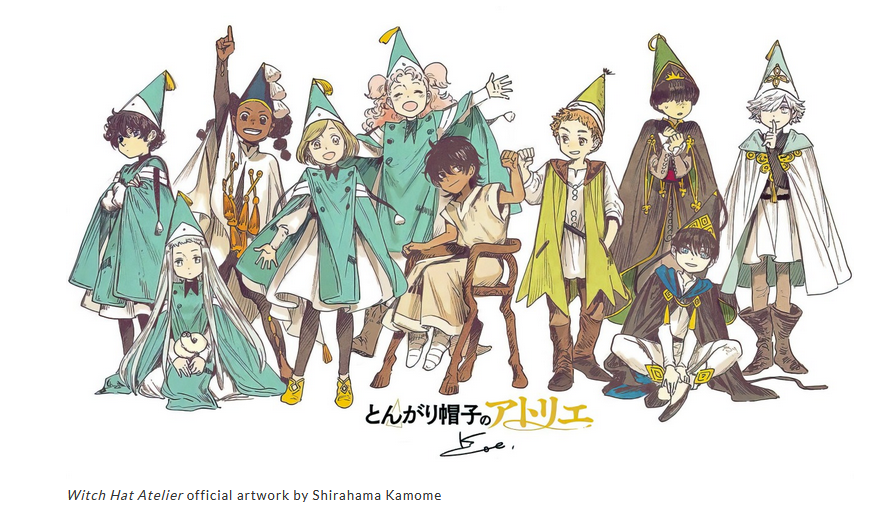
There is also range of skin colors in the show that build out the world and the cultures within it. One of the older witches, named Alaira, becomes a great help in teaching Coco and the other apprentices, but also helping them defeat the evil witch of the arc, known as a “brimmed cap”. She is depicted as a dark skin black woman with kindness for a child apprentices, but none of her own. This depiction of a black woman is a breath of fresh air for Japanese anime, that often doesn’t take time to draw dark-skin people of color.
In her interview with UNESCO, Shirahama discusses her want to use diverse cultures in her story with her mix of both eastern and western art in her manga. She states, “What I draw is fundamentally a Western-style fantasy world. In order to express that world as fully as possible, I felt that woodblock prints or classical artistic styles might be effective. At the same time, many artists choose their tools and visual language according to the worlds they want to depict. In that sense, style and technique are part of how a creator expresses the world of the work. I see myself as one example of that broader approach.” (UNESCO interview) Shirahama is one of only hundreds/thousands of different mangakas, filmmakers, producers, and many other Japanese artists pushing back on the idea of the mono-culture with the diversity of thought and culuture through their use of art.
Another one of these artists, is the iconic Hiromu Arakawa from rural Hokkaido, who became famous through her multidimensional early 2000s manga series, Full Metal Alchemist. Just like previous work, her current series, Daemons of the Shadowrealm, follows a diverse group of heroes as they battle thoughts of tradition, magic, and the power of equivalent exchange. However, Daemons chooses it’s setting as modern day Japan with urban fantasy elements filling the panels. Instead of being a full fantasy world, like Witch Hat and One Piece, Daemons paints a realistic picture of Japan with folklore from all around the world filling the cracks and edges.
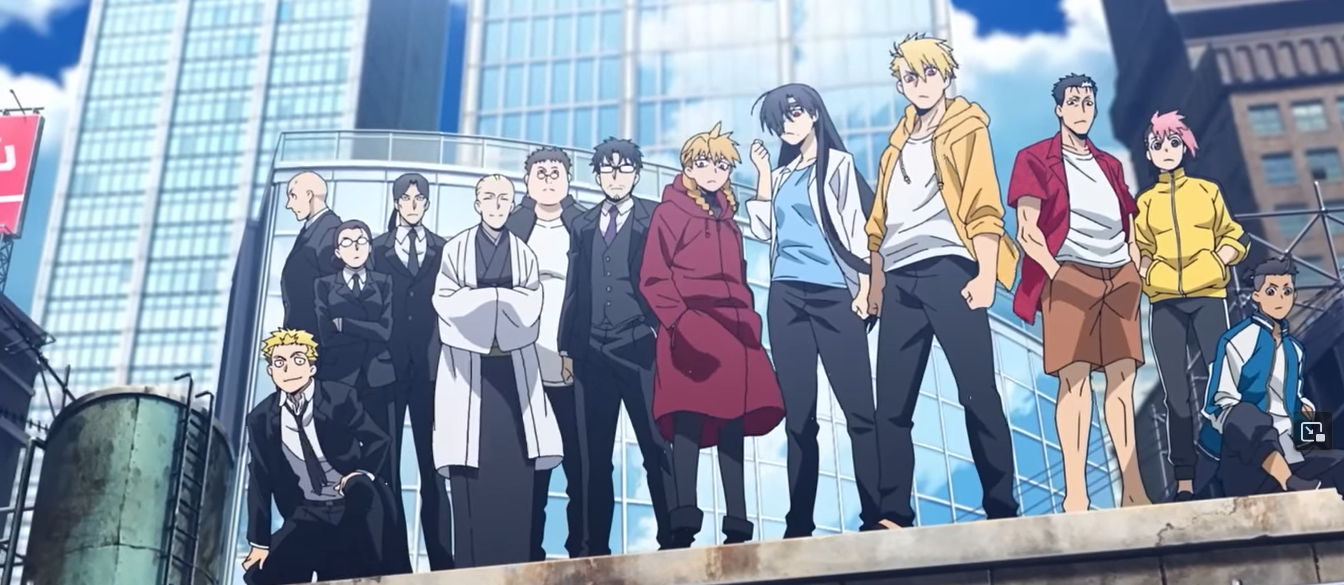
The character that embodies her message is a side character of the story, the tween boy of Ken Tadera: the half-Ethiopian, half-Japanese half-brother of the main characters’ mentor. He is depicted as an orphan living in Japan by himself searching for his biological father. Ken is a forgotten child in the country. Even though he speaks Japanese fluently and has lived in the country his entire life, he was bullied for dark skin. Arakawa’s seems to use his character as a microcosm of the mono-cultural paradox that plagues conservative Japan.
Arakawa was raised in the Northern prefecture of Hokkaido on a small dairy farm. She grew up learning stories of the indigenous Ainu people of the region. The Ainu were systematically oppressed by the Yamato people (the majority Japanese ethnicity). Their culture, language, and customs were almost all erased by the Japanese government. This oppression can be considered the foundation of Japanese mono-culture myth that pushes the belief that the Yamato culture is the only true Japanese culture. Arakawa uses this history as the background of her first series, Full Metal Alchemist, and remixes it within Daemons to comment on the conservative imagination of the pure mono-culture. There can’t be a mono-culture in a country that has a history of multiple ethnicities living within the archipelago. Ken is Japanese but isn’t recognized because he can’t conform to the “perfect picture” of Japan. Just like the rest of the characters in the manga, he has to fight to be a regular Japanese kid.
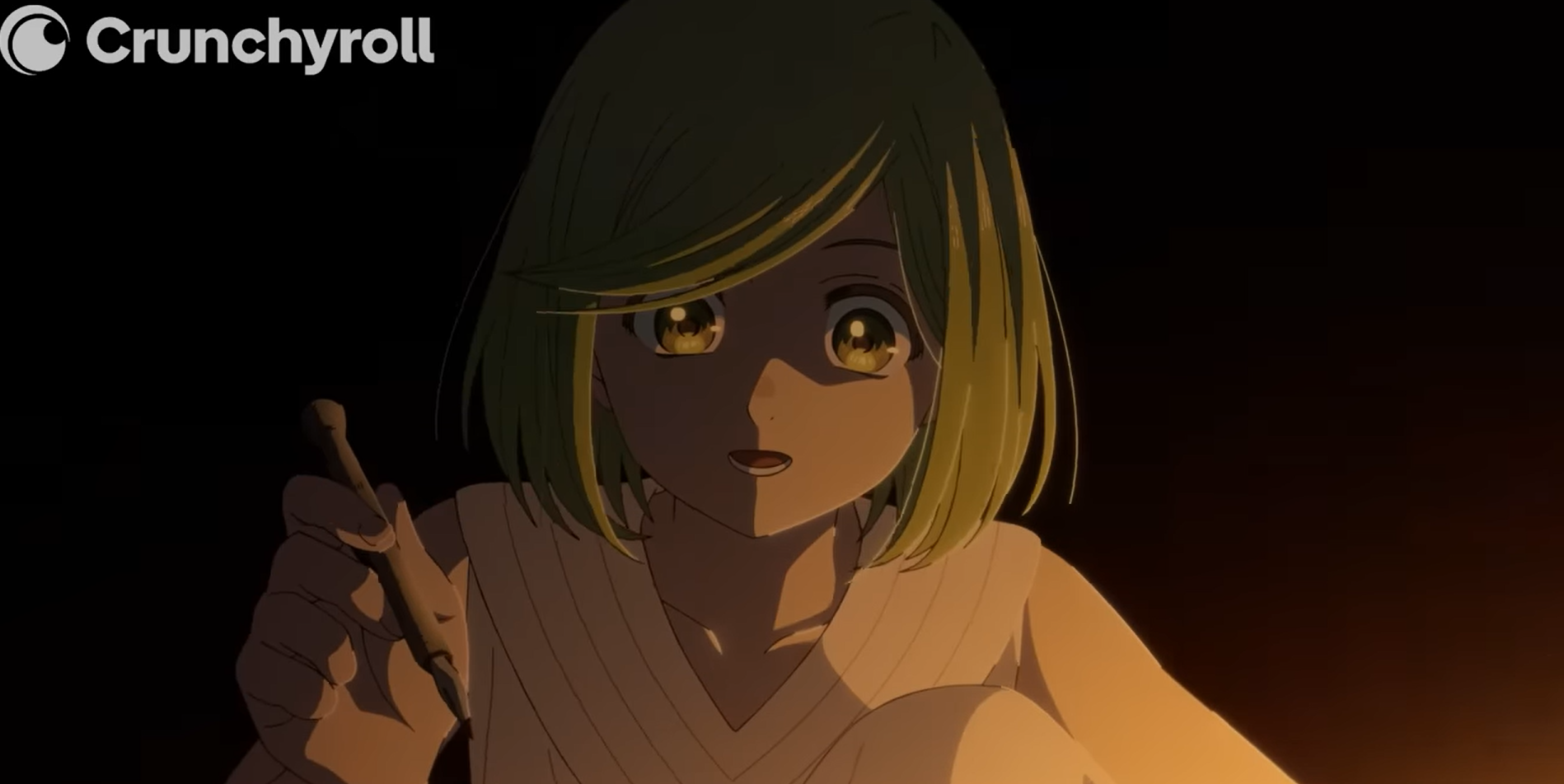
Anime is political. From broad strokes of fighting a tyrannical government in One Piece to the more person multicultural aspects of modern-day Japan, like Daemons of the Shadowrealm. Mangakas and their anime adapters have the capability to fight against the Japanese conservative government through the art they produce. Oda has a power to shape his own live action adaptation, Shirhama can use her attention to detail to tell universal stories, and Arakawa can bring to light Japanese colonialism through her pen and paper. This type of cultural power reminds me of the magic systems of Arakawa’s Full Metal Alchemist and Shirahama’s Witch Hat Atelier in that the characters have to complete a summoning circle in order to do magic. You must use the power of your own artistry in order to bring about change.
Bibliography:
- One Piece Official Podcast. “LOUGETOWN feauturing Inaki Godoy and Eiichiro Oda”, Netflix.
- UNESCO. “Kamome Shirahama: ‘My stories can speak to readers who feel uncertain about themselves'”. https://courier.unesco.org/en/articles/kamome-shirahama-my-stories-can-speak-readers-who-feel-uncertain-about-themselves, April 2, 2026.
Image Credits:
- Image 1: Screenshot of One Piece episode 274 from Google Image Search
- Image 2: Screenshot of X Post by The Cineprism taken by author: https://x.com/TheCineprism/status/2033189207108436214
- Image 3: Screenshot of Reddit Post by Sure-Video 1505 taken by author: https://www.reddit.com/r/OnePieceLiveAction/comments/165gyw6/one_piece_live_cast_nationalities/?solution=af3c1d931c00481eaf3c1d931c00481e&js_challenge=1&token=7afd7253fec22262ff1c52b1703fe9ec5b823f2df62526b6f2360fabd1d5bc41&jsc_orig_r=
- Image 4: Artwork of Witch Hat Atelier characters by Kamome Shirahama
- Image 5: Screenshot of Daemons of Shadowrealm opening YouTube Video taken by author: https://youtu.be/5lSKHQFa-i8?si=Na347FxfQWlev2Xf
- Image 6: Screenshot from episode 1 of Witch Hat Atelier from Crunchyroll YouTube Channel taken by author: https://youtu.be/ZSGVFk9w5qA?si=v_L_6ouS5xT-PG5I